If your brand is doing real volume and fulfillment still feels harder every quarter, the problem may not be your operation. It may be your model. Many teams searching for a shipbob alternative for ecommerce brands are not trying to replace one warehouse with another. They are trying to get out of a system that feels too rigid, too expensive, and too far removed from the day-to-day realities of shipping profitably in the US.
That usually shows up in familiar ways. Parcel costs creep up. Delivery times get less predictable outside major metro areas. Support tickets stall. Special projects become painful. And the bigger your account gets, the more frustrating it becomes to feel like you still have very little control.
For mid-market ecommerce brands, the better question is not simply who competes with ShipBob. It is which fulfillment model actually fits your business once you move past the startup stage.
What a ShipBob alternative for ecommerce brands should actually fix
A real alternative should solve operational and financial issues, not just offer a different logo and a new onboarding deck. If your current provider still relies on a centralized or semi-centralized approach, you may get the same problems in a different package.
Most scaling brands need four things at the same time. They need lower average shipping zones, stronger 2-day ground coverage, pricing that does not punish heavier or more complex orders, and access to people who can actually make decisions when something goes wrong.
That combination is harder to find than most brands expect. Large fulfillment companies are good at selling national reach. They are often less good at delivering national performance without forcing brands into enterprise-style processes, layered support, and rigid operating rules.
This is where many alternatives fall short. They promise technology, visibility, and scale, but they still run on a model that prioritizes standardization over fit. That works for some brands. It works a lot less well for businesses with dimensional products, custom packaging requirements, B2B and DTC overlap, seasonal swings, or inventory that needs to be positioned carefully across regions.
Why brands start looking beyond ShipBob
The trigger is rarely one bad week. More often, it is a pattern.
A founder notices that shipping has become one of the fastest-growing line items on the P&L. An operations lead realizes that too many orders are traveling too many zones. A customer experience team sees preventable delivery complaints piling up. Then someone asks the obvious question: are we paying enterprise prices without getting enterprise performance?
That question matters because fulfillment problems compound. When orders ship from the wrong region, your parcel cost goes up and your delivery promise gets weaker. When support is slow, small exceptions turn into larger customer issues. When your 3PL is inflexible, every packaging change, promotion, bundle, or wholesale requirement becomes a negotiation.
At that point, switching is not about frustration alone. It becomes a growth decision.
The core trade-off: big-network convenience vs operational accountability
Here is the trade-off many brands eventually run into. Large, centralized fulfillment providers offer one system and one brand experience. On paper, that feels simple. In practice, simplicity for the provider can create friction for the client.
You may get a polished dashboard but limited operational flexibility. You may get broad coverage but inconsistent execution across nodes. You may get account management, but not executive accessibility. And when service issues show up, you may find yourself working through layers of process instead of talking to someone with the authority to fix the problem.
A better shipbob alternative for ecommerce brands usually looks different. Instead of forcing every brand into one operating style, it builds national fulfillment through coordinated regional execution. That means inventory can sit closer to demand, ground shipping can do more of the heavy lifting, and service can stay more responsive because warehouses are not buried inside an enterprise support structure.
That model is not perfect for every company. Brands with very simple SKU mixes, lightweight products, and minimal support needs may be fine in a more standardized environment. But once complexity enters the picture, accountability matters a lot more than branding.
What to evaluate in a ShipBob alternative for ecommerce brands
Start with network design, not software. Technology matters, but it does not erase bad geography. If your orders are still shipping long distances, your costs and transit times will keep fighting you. Ask where inventory will actually sit, how order volume is distributed, and what percentage of your customers can realistically be reached with 2-day ground.
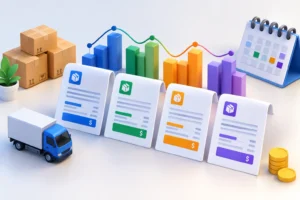
Next, look closely at pricing behavior. Some 3PLs appear competitive until dimensional weight, storage profiles, special handling, or project work enter the picture. If your products are heavy, bulky, fragile, subscription-based, or operationally nuanced, generic rate cards can get expensive fast. The right partner should be able to explain your true cost structure before you sign, not after the first billing surprise.
Support is another major separator. Many brands underestimate this until they need it. Ask who owns the relationship, how issues are escalated, and whether you will have direct access to decision-makers. A provider that hides behind ticket queues and generic account layers may still look efficient from the outside, but that distance becomes expensive when exceptions hit.
Finally, test flexibility. Can the provider handle B2B routing requirements alongside DTC? Can they support custom kitting or packaging changes without turning every request into a special project? Can they adapt as your assortment, channels, and order profile evolve? Fulfillment should help you grow, not force you to simplify your business to match someone else’s system.
Why regional fulfillment networks are gaining ground
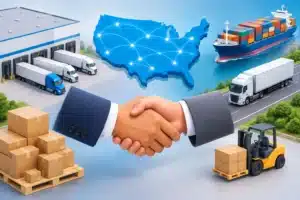
For brands in the $2M to $50M range, regional distribution has become a much more practical answer than the old binary choice between one warehouse and a massive enterprise 3PL. You do not need to build your own national infrastructure to get national performance. You need inventory positioned intelligently and operators who know how to execute.
That is the advantage of a coordinated regional network. It reduces parcel zone exposure, improves delivery speed through ground coverage, and creates more room for operational nuance. It also tends to produce a very different service experience because regional operators are closer to the work and more accountable for outcomes.
This is one reason the multi-node model resonates with growing brands. It gives you the reach that a national seller needs without trapping you inside the enterprise headache that so often comes with scaled fulfillment contracts.
In the right setup, you are not choosing between scale and service. You are choosing a structure that gives you both.
When it makes sense to switch
Not every frustration means you need a new provider tomorrow. Switching warehouses has real cost, real risk, and real effort behind it. If your current partner is generally reliable and your biggest issue is a fixable process gap, pushing for better operating discipline may be enough.
But there are clear signs when a change is justified. If your shipping costs are consistently too high because inventory is not placed correctly, that is structural. If service issues persist because support is too far removed from operations, that is structural. If your brand has become more complex but your 3PL still treats every request like an exception, that is structural too.
Structural problems usually do not improve with another quarter of patience. They improve when the fulfillment model changes.
For brands that have outgrown a one-size-fits-all provider, the strongest alternative is often not another large fulfillment company making similar promises. It is a network designed around regional performance, lower friction, and direct accountability. That is the model Ecommerce Fulfillment Alliance is built around, and it reflects what many mid-market brands actually need once volume, shipping costs, and customer expectations all start rising at the same time.
The right partner should make fulfillment feel more controllable, not more corporate. If your current setup keeps adding cost and complexity without adding confidence, there is a better way – and it usually starts by choosing a model that matches how your brand really ships.