A brand doing $8 million in annual ecommerce revenue should not have to accept five-day delivery to half the country because its fulfillment partner has one warehouse in the wrong place. Nor should it need to sign a rigid enterprise contract just to access a national footprint. An enterprise 3PL alternative gives growing brands another path: regional execution, coordinated nationally, with the service level and accountability that disappear when a provider gets too big to know your business.
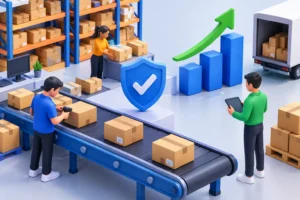
For many brands, the enterprise 3PL model looks attractive at first. The sales deck promises scale, technology, and warehouse coverage. The operating reality can be very different: slow ticket responses, surprise fees, inflexible processes, and a single account manager trying to manage hundreds of accounts. If your products are heavy, dimensional, subscription-based, or operationally unusual, that gap gets expensive fast.
Why Enterprise Fulfillment Breaks Down for Mid-Market Brands
Large 3PLs are built to standardize. Standardization has value when an order profile is simple, volumes are predictable, and the brand can fit neatly into an existing operating model. But brands in the $2 million to $50 million range rarely stay that simple for long.
A fast-growing catalog creates new kitting requirements. A seasonal launch changes inventory flow. Retail expansion adds compliance needs. A product with awkward dimensions changes the parcel economics. At an enterprise provider, each exception can become a new fee, a long approval process, or a request that the brand change its operations to fit the warehouse.
That is the wrong power dynamic. Your fulfillment network should support the way your business needs to grow, not force your operations team to work around a provider’s internal limitations.
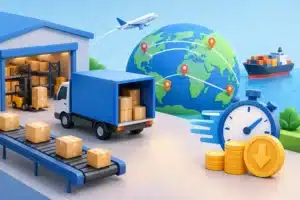
The other problem is distance. A single national warehouse may technically serve the entire United States, but it does not serve every customer efficiently. Orders traveling from one coast to the other spend more time in transit, cross more shipping zones, and cost more to ship. Expedited service can hide the transit issue, but it usually makes the margin issue worse.
What an Enterprise 3PL Alternative Should Actually Change
A real alternative is not simply a smaller warehouse with friendlier people. It needs to improve the economics and operating model at the same time.
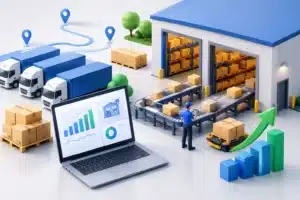
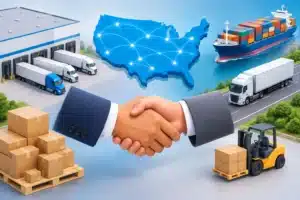
The strongest approach is a coordinated multi-node network. Instead of placing all inventory in one large facility, a brand holds the right inventory in strategically located regional fulfillment centers. Orders ship from the location closest to the customer whenever possible. That reduces average parcel zones and puts two-day ground delivery within reach for the majority of the customer base.
For a national brand, this can change the daily math. Shorter shipping zones often mean lower ground shipping costs. Ground delivery becomes fast enough that fewer customers need costly air upgrades. Faster delivery can also reduce “where is my order?” contacts and improve the post-purchase experience without adding a bigger shipping subsidy.
The right network also changes accountability. A regional operator has a direct stake in the relationship. Its leadership is closer to the warehouse floor, and problems are more likely to reach someone who can solve them. That does not mean every local 3PL is automatically a fit. It means the network must have common standards, shared visibility, clear escalation paths, and one party responsible for coordinating the whole operation.
National Reach Without a Single Point of Failure
Centralizing inventory can feel simpler, especially when a brand is early in its growth. One inbound destination, one warehouse team, and one inventory pool are easy to understand. The downside is concentration risk.
A weather event, labor disruption, carrier issue, or warehouse backlog can affect every order. Even without a major disruption, one facility may create consistently poor delivery performance in regions far from its location. Customers do not care that the order left on time if it spends four or five days moving across the country.
Multi-node fulfillment introduces more planning, but it also creates useful resilience. Inventory can be allocated based on demand patterns, sales velocity, product dimensions, and replenishment lead times. If one node encounters a temporary issue, the network has options that a single-site model does not.
The goal is not to scatter inventory everywhere. Too many nodes can increase inbound complexity, split inventory inefficiently, and create more stockout risk. Most mid-market brands need a deliberate number of locations, not maximum locations. The best configuration depends on where customers live, where inventory enters the country, SKU velocity, average order value, and the cost of moving inventory between facilities.
Two-Day Ground Coverage Is a Strategy, Not a Slogan
Two-day delivery matters because customers have been conditioned to expect it. But promising two-day delivery nationwide is not the same as building an operating model that can achieve it at a reasonable cost.
A practical target is 90% or more of customers reachable by two-day ground service. That result comes from warehouse placement and inventory allocation, not from paying for premium shipping on every order. Brands should ask for a lane-level analysis that shows where orders ship today, what zones they cross, and what would change under a multi-node model.
That analysis should also account for the real order mix. A lightweight apparel brand has different parcel economics than a brand shipping boxed cookware, supplements in multi-unit orders, or large home goods. An enterprise provider’s standard rate card may look competitive until dimensional weight, accessorial charges, and zone exposure show up in the monthly invoice.
Service Is an Operating Advantage
When fulfillment fails, the first cost is not always a shipping charge. It is often time. Your operations team spends hours opening tickets, requesting updates, reconciling inventory discrepancies, and explaining preventable delays to customer service and leadership.
Enterprise providers often route these issues through layers of support. That process may be acceptable for a minor address correction. It is far less acceptable when a product launch is delayed, inventory is received incorrectly, or a carrier pickup failure threatens thousands of orders.
A better fulfillment partner gives brands access to people who understand the account, the product, and the urgency. Executive accessibility is not a nice-to-have. It is a control mechanism. It ensures that critical decisions are not trapped in a generic support queue while the cost of the problem grows.
Ecommerce Fulfillment Alliance is built around that principle: independent regional operators can provide hands-on execution while working as part of a coordinated national model. Brands get national reach without becoming another anonymous account inside a massive fulfillment machine.
How to Evaluate the Alternative Before You Move
Do not switch providers based on a broad claim about lower rates or faster delivery. Ask for operating evidence. A credible partner should be able to discuss your current shipping-zone distribution, recommended inventory placement, expected ground coverage, onboarding requirements, and the trade-offs involved.
Look closely at pricing structure. Transparent pricing is more valuable than a low headline pick-and-pack rate followed by storage minimums, receiving charges, special project fees, and parcel markups that are difficult to forecast. You need to understand what changes when order volume shifts, a new SKU launches, or your packaging changes.
Also examine the technology and governance model. Multiple facilities must not mean multiple disconnected systems and a different answer from every warehouse. Ask who owns inventory accuracy, how order-routing rules are managed, how exceptions are escalated, and who can make a decision when a node is not meeting the standard.
Finally, assess the transition plan. A network strategy can create meaningful gains, but a rushed inventory split can create avoidable disruption. Good onboarding starts with data, demand by region, SKU velocity, inbound constraints, and service requirements. Then it moves in phases, with measurable checkpoints rather than a risky all-at-once move.
The Better Question to Ask
The question is not whether a giant 3PL has more buildings than a regional network. The question is whether its model gives your brand better delivery performance, lower landed fulfillment costs, and faster resolution when something goes wrong.
For some brands, a single enterprise provider will be the right fit. If your operations are highly standardized and you value consolidation above all else, it may make sense. But if you are paying too much to ship across the country, losing time to support queues, or being told that your business is too complex for the standard process, there is a better way to structure fulfillment.
Start with the customer map and the parcel invoice. Those two documents usually make the next decision much clearer.