A brand shipping 8,000 orders a month from one warehouse can look efficient on a spreadsheet – until parcel invoices, late deliveries, and customer service tickets tell a different story. The problem is not always the warehouse. It is often the network behind it. This fulfillment network design guide explains how growing ecommerce brands can place inventory closer to demand without signing up for a bloated enterprise 3PL relationship.
For brands between $2M and $50M in revenue, network design is not a theory exercise. It determines whether you can offer competitive delivery promises, protect margin on every order, and keep your team focused on growth instead of chasing exceptions. The right answer is rarely “open warehouses everywhere.” It is a deliberate balance of freight, inventory, labor, parcel zones, and operational control.
Start With Demand, Not Warehouse Locations
Many fulfillment proposals begin with a map of warehouse dots. That is backward. Start with where orders are actually going, what customers are buying, and how those products ship.
Pull 12 months of order data if you have it. At minimum, review destination ZIP codes, order volume by region, average order weight, package dimensions, carrier service used, and the percentage of orders that contain more than one SKU. Seasonality matters too. A network built around your annual average can fail badly during the quarter that matters most.
A simple question often exposes the opportunity: what percentage of your orders currently ship Zone 6, 7, or 8? If a meaningful share of orders travels across the country, you are paying premium parcel rates while asking customers to wait longer. For a brand shipping from the Midwest, West Coast demand may be driving both costs and complaints. For an East Coast operation, the reverse may be true.
Do not assume geography alone decides the issue. A lightweight apparel brand and a dimensional home goods brand can ship the same number of packages to California and have completely different economics. Heavier and larger packages gain more from reducing zones because distance carries a bigger parcel penalty.
What a Fulfillment Network Is Designed to Solve
A multi-node network should solve specific business problems. It should not exist because national coverage sounds impressive in a sales presentation.
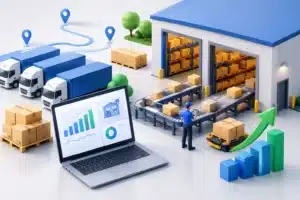
The most common objective is reducing the average distance between inventory and customers. That can lower parcel spend and make 2-day ground delivery possible for a much larger share of the country. A well-positioned two- or three-node network can often provide 2-day ground coverage for 90% or more of domestic customers, depending on order distribution and carrier service levels.
Speed is only one outcome. Better network design can also reduce dependence on air upgrades, improve the customer experience during peak periods, and give the business more options when weather, carrier disruptions, or local labor issues affect one facility. It can support regional inventory strategies for fast-moving products while preventing every building from carrying every slow-moving SKU.
That last point is where many brands get burned. More nodes can reduce parcel cost, but they also increase inventory complexity. Every additional warehouse creates another place to replenish, count inventory, manage receiving, and investigate discrepancies. If the savings on shipping do not outweigh those costs, a broader network is just an expensive map.
Choose the Right Number of Nodes
There is no prize for having the most fulfillment centers. The best network is the smallest practical network that meets your service and cost targets.
For many mid-market brands, a two-node model is the first meaningful step beyond a single warehouse. An East or Central location paired with a West Coast location can sharply reduce long-zone shipments. A third node may make sense when customer density, product characteristics, or delivery commitments justify it. It can also be valuable for brands with concentrated demand in the South or Northeast.
The trade-off is inventory fragmentation. With two nodes, you may need to split core inventory across both facilities. With three, you need stronger forecasting and replenishment discipline. A SKU that sells slowly may be better stocked in one location, even if that means a longer delivery window for some orders. Sending every SKU to every warehouse is a common mistake, especially for brands with broad catalogs or uneven sell-through.
A practical approach is to classify inventory by velocity and order importance. Fast-moving, frequently bundled, and high-margin items are stronger candidates for multi-node placement. Long-tail products, oversized accessories, and unpredictable sellers may belong in a primary facility until the data supports a wider split.
Model Total Landed Fulfillment Cost
Do not make the decision based on parcel rates alone. Compare the full cost of each network scenario, including inbound freight to each node, receiving and storage, pick-and-pack pricing, packaging, parcel spend, inventory transfers, and the operational cost of managing replenishment.
Also model the cost of poor service. If long transit times push customers to contact support, abandon repeat purchases, or demand refunds, those costs belong in the analysis. They are not always easy to assign to a single shipment, but they are real.
The right network is often revealed by a few scenarios: stay single-node, add a second node, or add a third node. Use actual order data in each model. Generic national shipping averages can point you in the right direction, but they should not make the decision for you.
Design for Inventory Flow, Not Just Order Flow
Outbound shipping gets most of the attention because it is visible and expensive. Inbound flow can quietly erase the savings from a better parcel map.
If inventory arrives through one port or manufacturer and must be broken into several fulfillment locations, consider the cost and timing of the split. Container drayage, transloading, palletization, and domestic freight all need to be planned. A network that saves $1.20 per package on outbound shipping may still be a win, but only if inbound distribution is organized and replenishment does not become a weekly fire drill.
Set clear replenishment rules before you add nodes. Determine who monitors inventory, what days transfers or replenishment loads move, and what safety-stock thresholds trigger action. The objective is not to fill every warehouse to the ceiling. It is to keep the right inventory available where demand requires it without tying up unnecessary working capital.
Technology matters here, but software does not compensate for vague ownership. Your warehouse management system, order management system, and inventory planning tools need accurate inventory visibility and sensible order-routing rules. Just as important, someone needs the authority to act when sales patterns change.
Keep Order Routing Simple Enough to Trust
Order routing should favor the lowest-cost facility that can meet the delivery promise, but exceptions need rules. If the nearest warehouse is out of stock, can an order ship from another node? If a customer orders items held in separate facilities, will you split the shipment or route from one location at a slower speed?
There is no universal answer. Splitting orders can protect delivery speed, but it creates extra parcel charges and more packages for the customer. Shipping from one location can reduce handling and packaging, but it may extend transit time. The right policy depends on average order value, margin, customer expectations, and the frequency of split-order situations.
Keep those decisions visible. Large enterprise providers often bury routing logic behind a ticket queue and a generic support inbox. Growing brands need access to people who understand the account, can explain what happened, and can change a process when the business changes.
Evaluate Partners for Accountability, Not Footprint
A national fulfillment partner can offer real leverage, but scale alone is not a service model. Ask who owns day-to-day performance, who can make decisions when an issue occurs, and whether each facility has local operators who are accountable for results.
You should also understand whether the network operates as one coordinated system or simply as a collection of warehouses with a shared logo. Consistent reporting, inventory standards, carrier strategy, service-level expectations, and escalation paths matter. So does flexibility. A brand growing quickly should not be trapped in a contract built for a much larger company with a procurement department and a full-time logistics team.
Ecommerce Fulfillment Alliance is built around this middle ground: coordinated regional operators that provide national reach without forcing brands into an impersonal enterprise model. That structure can be especially useful when your products need more attention than a one-size-fits-all fulfillment program allows.
Measure the Network After It Launches
A network design is not finished on go-live day. Review performance monthly, then revisit the strategy as demand changes. Watch average shipping zone, parcel cost per order, percentage of orders delivered within two days by ground service, split-shipment rate, inventory accuracy, and stockout frequency by node.
Look for cause and effect, not isolated numbers. A lower average zone is good, but not if transfer costs are rising faster than parcel savings. Higher 2-day coverage is valuable, but not if slow-moving inventory is piling up in multiple buildings. The point is to make informed adjustments before inefficiency becomes normal.
The strongest fulfillment network is not the largest or most complicated one. It is the one that puts inventory close enough to customers to protect cost and speed, while staying simple enough for your team to run with confidence. Build from your order data, test the economics honestly, and insist on partners who answer the phone when the plan meets reality.