A $9 pick-and-pack rate can look like a bargain until the invoice lands. Add residential surcharges, dimensional weight, storage overages, packaging, return handling, and a warehouse location that forces most orders into high shipping zones, and the real number may be far higher. This ecommerce fulfillment cost guide is built for brands that need to see the full cost of fulfillment before signing another contract.
For a growing ecommerce brand, fulfillment is not a back-office line item. It affects contribution margin, conversion, repeat purchase behavior, and how much cash gets tied up in inventory. The goal is not simply to find the lowest quoted fee. It is to build a fulfillment model that lowers the total cost to serve each customer while delivering quickly and reliably.
Ecommerce Fulfillment Cost Guide: What You Are Actually Paying For
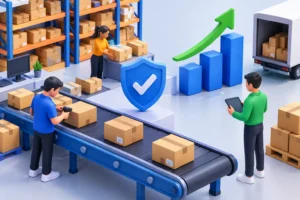
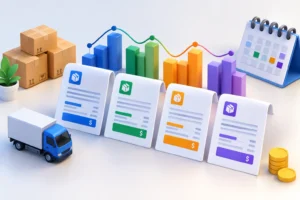
A fulfillment invoice usually combines five cost categories: inbound receiving, storage, order handling, packaging, and outbound shipping. Returns, special projects, technology fees, and account management charges can add more. A transparent provider will show each category clearly and explain what causes it to move.
Receiving and inbound handling
Receiving charges cover unloading, counting, inspecting, labeling, palletizing, and putting inventory away. Providers may charge by pallet, carton, unit, hour, or appointment. None of these structures is automatically wrong. The issue is whether the structure matches your inbound profile.
A brand sending full pallets of consistent product should not be priced like a brand sending loose cartons with frequent SKU discrepancies. Ask what happens when an inbound shipment arrives early, late, short, damaged, or without compliant labels. Those exceptions are where a simple receiving rate becomes an expensive one.
Storage
Storage is generally billed by pallet, bin, shelf, cubic foot, or unit. Your monthly storage cost depends on inventory velocity as much as the rate itself. A low pallet rate is not helpful if poor replenishment practices create overflow charges, or if your inventory sits in the wrong locations for months.
For brands with seasonal demand, clarify how peak inventory is handled. Some 3PLs offer reasonable temporary capacity. Others use peak season as an opportunity to impose high minimums or punitive overflow fees. Know the rules before inventory is already on the dock.
Pick, pack, and packaging
Order handling commonly includes a first-item pick fee and an additional-item fee. This is a sensible model, but order complexity matters. A single-SKU subscription order has a very different labor profile than a six-item bundle requiring inserts, kitting, fragile packing, and lot tracking.
Packaging can be included, pass-through, or marked up. Ask which cartons, mailers, void fill, tape, inserts, and branded materials are covered. Also ask who decides when to use a larger box. An oversized carton does not just add a few cents in materials. It can trigger dimensional-weight shipping charges that erase margin on the whole order.
Outbound shipping
For most national brands, parcel shipping is the largest fulfillment expense. Your effective shipping cost is driven by package weight and dimensions, destination zone, carrier service, residential delivery rules, and surcharges.
The key question is not, “What is your discounted UPS or FedEx rate?” Ask to see the modeled landed shipping cost using your actual order history. A 3PL can advertise aggressive carrier discounts while shipping from a single distant warehouse that puts much of your customer base in Zones 6 through 8. The rate card may look good. The network design is still costing you money.
The Cost Most Brands Miss: Shipping Zone
A package traveling from Pennsylvania to New Jersey is usually cheaper than the same package traveling from Pennsylvania to California. It also arrives faster with standard ground service. That is why fulfillment location is a cost strategy, not just an operations decision.
A single-node setup can be perfectly reasonable for an early-stage brand with concentrated demand. But when order volume grows nationally, it often creates a predictable problem: too many orders travel too far. The brand responds by paying for expedited shipping to meet customer expectations, or accepts slower delivery and watches support tickets and cart abandonment rise.
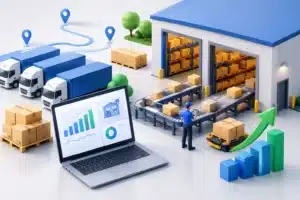
A multi-node model places inventory closer to demand. Done well, it reduces average shipping zones and allows 2-day ground coverage for the majority of customers without routinely paying for air service. It does introduce complexity. Inventory must be allocated intelligently, replenishment requires discipline, and not every SKU belongs in every building. Still, for brands with sufficient national volume, the shipping savings can outweigh the added inventory handling.
Do not assume two or three locations will automatically save money. Model it. Compare current orders by destination, package profile, carrier service, and zone. Then test a realistic inventory split. The right answer depends on order density, SKU count, product size, replenishment cadence, and where customers actually live.
How to Compare 3PL Quotes Without Getting Played
A rate sheet is not a total-cost comparison. It is an invitation to ask better questions. Two providers can quote similar pick fees and produce vastly different monthly invoices because of shipping zones, minimums, accessorials, and operational exceptions.
Start with 60 to 90 days of clean order data. Include destination ZIP codes, shipment weights, dimensions, order line counts, SKUs, shipping methods, return volume, and inbound shipment details. If a provider will not model from real data, their proposal is a guess. You should not make a network decision based on a guess.
Then request an all-in monthly model that separates fulfillment fees from postage. The proposal should identify assumptions about packaging, peak volume, storage, receiving, kitting, and customer service. It should also disclose minimum monthly charges, implementation fees, technology fees, contract length, rate increases, and termination terms.
Watch for four common cost traps:
- Low pick fees paired with high shipping markups or weak carrier rates.
- A cheap primary facility that forces costly long-zone parcel shipments.
- Broad “special project” language with no clear hourly rate or approval process.
- Long commitments with volume minimums that no longer fit when your demand changes.
The lowest quote can become the most expensive relationship when the provider has room to interpret the rate card after you are operationally locked in. Good partners put the hard parts in writing.
Build a Cost-Per-Order View, Not Just an Invoice View
Your finance team needs one number it can track over time: total fulfillment cost per shipped order. Calculate it by dividing all fulfillment-related expenses by shipped orders for the period. Include receiving, storage, pick-and-pack, packaging, postage, surcharges, returns, and recurring platform or management fees.
Then segment that number. Look at cost per order by region, product family, order size, carrier, and customer shipping method. A blended average can hide a serious problem, such as a bulky product that becomes unprofitable on West Coast orders or a low-AOV item that cannot absorb residential surcharges.
This analysis creates better decisions. You may find that a packaging redesign lowers dimensional charges enough to pay for itself. You may decide to set a free-shipping threshold that better reflects actual delivery cost. Or you may see that placing fast-moving inventory in a second region reduces both parcel spend and transit time.
When a Regional Network Makes Financial Sense
Enterprise 3PLs often sell scale as if scale alone guarantees lower costs. It does not. Large networks can be useful, but they can also come with rigid contracts, standardized workflows, slow escalation paths, and an account team that changes when you need help most.
A coordinated regional network offers a different trade-off. You get national reach while working with operators who know their buildings, teams, and local carrier conditions. For a mid-market brand, that can mean faster decisions, more practical problem-solving, and a network designed around where orders need to go rather than where a corporate provider happens to have capacity.
Ecommerce Fulfillment Alliance helps brands evaluate that model without forcing them into a one-size-fits-all enterprise contract. The right network should improve the economics and the service level at the same time. If it only adds nodes and invoices, it is not a strategy.
Questions to Ask Before You Sign
Before choosing a fulfillment partner, ask for the average shipping zone your orders will travel from the proposed network. Ask what percentage of your customers can receive ground delivery within two days. Ask who owns carrier negotiations, how surcharge changes are passed through, and whether you can audit shipping invoices.
Also ask operational questions that reveal whether the provider will be accountable after launch: Who answers when a shipment is missed? What is the escalation path during peak season? How are inventory discrepancies resolved? Can the warehouse support your packaging, kitting, lot control, or subscription requirements without treating every request as an exception?
The best fulfillment cost reduction is rarely a single fee concession. It comes from placing inventory closer to customers, packaging orders correctly, controlling exceptions, and working with people who will tell you when a plan is not working. That is the kind of cost discipline that protects margin while giving customers a delivery experience worth coming back for.