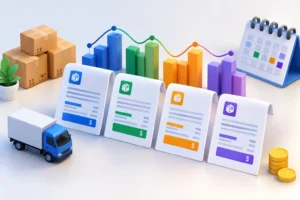
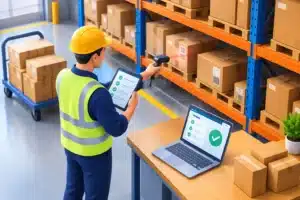
A bulky product can look profitable on a product page and become expensive the moment it hits a packing station. A 3PL may be able to store it, but that does not automatically mean it can ship it well. So, can 3PLs ship oversized items? Yes, but only when the warehouse, carrier strategy, packaging standards, and delivery expectations are designed for the product instead of treated as an exception.
For ecommerce brands shipping furniture, fitness equipment, large pet products, outdoor gear, oversized home goods, or dimensional kits, fulfillment is not just about picking and packing. It is about controlling the operational details that drive accessorial fees, damage claims, customer complaints, and margin erosion.
What Counts as Oversized in Fulfillment?
There is no single industry definition. Oversized can mean a parcel that exceeds a carrier’s length, girth, weight, or cubic-volume threshold. It can also mean a product that needs two people to handle, special storage equipment, custom packaging, or an LTL freight carrier rather than a standard parcel network.
That distinction matters because a product can be light and still be expensive to ship. A large but lightweight box may trigger dimensional-weight pricing, which means the carrier charges based on the space it occupies in a truck rather than its actual scale weight. A 25-pound product in a long carton can cost more to ship than a denser 60-pound item in a compact box.
The real question is not whether an item is technically oversized. The question is whether it breaks the standard operating model of the 3PL you are considering.
Can 3PLs Ship Oversized Items at Scale?
Many can. Fewer are set up to do it consistently across multiple regions without turning every order into a manual exception.
A capable oversized fulfillment operation has the right physical layout: wider aisles, racking designed for longer or heavier inventory, dock access, forklifts or lift equipment, and enough floor space to stage bulky orders safely. It also has labor processes built for the work. A team used to mailing apparel in poly bags will not automatically be efficient at packing a 90-pound boxed product, applying freight labels, or scheduling residential delivery appointments.
Carrier capability is equally important. Standard parcel carriers can handle some large packages, but their size and weight limits are strict and surcharges can climb quickly. Beyond that point, an order may need LTL freight, white-glove delivery, room-of-choice service, liftgate delivery, or appointment scheduling. Those services introduce more handoffs, more cost variables, and more opportunities for a customer experience problem.
This is where large, standardized fulfillment providers often disappoint growing brands. Their operating model is built around repeatable small-parcel workflows. If your product sits outside those workflows, you may face higher exception fees, limited packaging flexibility, slow support, or a flat no when your needs become more complex.
The Cost Problem Is Usually Dimensional, Not Just Weight
Oversized shipping costs are rarely solved by negotiating a slightly better carrier rate. The larger opportunity is reducing how often you pay to move air, how far each shipment travels, and how often a shipment gets damaged or reworked.
Start with packaging. A carton that is only a few inches too large can push an order into a higher dimensional-weight tier. On a high-volume SKU, that design mistake compounds fast. Custom inserts, right-sized cartons, and thoughtful product configuration can reduce damage while keeping the package inside a more manageable carrier threshold.
Then look at inventory placement. Shipping a bulky item from one warehouse to customers across the country is an expensive habit. Longer shipping zones mean higher freight costs, slower delivery, and greater exposure to carrier mishandling. For large products, those problems multiply because the shipment costs more at every step.
A multi-node model can change the math. By placing inventory in the regions where demand already exists, brands can shorten average shipping zones and make ground delivery practical for more orders. Ecommerce Fulfillment Alliance helps brands build that kind of national reach through accountable regional operators, rather than forcing every product into a one-size-fits-all enterprise network.
The Right 3PL Setup Depends on the Product
Not every oversized item needs a dedicated freight operation. A large boxed product that remains within parcel limits may work well in a warehouse with strong parcel processes, custom packing capability, and carrier agreements that account for dimensional shipments.
A heavier or awkward product may need a different model. If it requires palletization, a liftgate, delivery appointments, or two-person handling, the 3PL must have real freight experience. Ask who manages freight classification, bill of lading creation, carrier scheduling, claims, and customer communication when a delivery window changes. If the answer is vague, the operation is probably not ready.
Some brands also need a hybrid approach. Smaller accessories may ship through parcel from several fulfillment nodes, while larger core products ship from fewer strategically located facilities by LTL. That can be the right balance between inventory complexity and transportation savings. There is no prize for having the most warehouse locations if each node creates more stockouts, transfers, and operational overhead.
Questions to Ask Before You Move Inventory
A sales presentation will not tell you whether a 3PL can execute oversized fulfillment. Operational questions will. Before signing, get specific about the daily work.
Ask how the facility stores long, heavy, or irregular inventory and whether it has the equipment to move it safely. Confirm the maximum package dimensions and weights it handles routinely, not just what it can accept in theory. Review how orders are packed, photographed, quality-checked, and staged before carrier pickup.
You should also understand the commercial details. Oversized programs can carry receiving fees, pallet storage charges, pick fees, packing-material costs, freight-management fees, accessorial markups, and special-handling charges. None of those charges are inherently unreasonable. Hidden or poorly explained charges are the problem.
Get answers to these five questions in writing:
- Which carriers and service levels are available for my actual package dimensions and delivery requirements?
- What accessorial charges are common, and how are they passed through?
- Who owns damage claims, and what evidence is captured before a shipment leaves the warehouse?
- Can the warehouse support custom packaging, inserts, palletization, or kitting without constant manual workarounds?
- What service levels apply during peak volume, when bulky orders take more space and labor to process?
Oversized Fulfillment Requires Better Data Up Front
The onboarding data for oversized products has to be more accurate than a basic SKU list. Give the 3PL verified unit dimensions, packaged dimensions, weights, pallet configuration, storage requirements, product fragility, and photos of the product and carton. If the product ships in multiple boxes, identify the exact combinations and whether partial shipments are allowed.
This information affects carrier selection, slotting, labor planning, packaging procurement, and rate modeling. Bad dimensions create bad quotes. Then the first invoice arrives with unexpected surcharges, and both sides discover that the original assumptions were wrong.
It also pays to send test orders before a full launch. Inspect packaging, label placement, tracking behavior, carrier handoff, and the delivery experience in several regions. For expensive products, test the returns process too. A 3PL that can ship a large item is not necessarily prepared to receive, inspect, refurbish, restock, or disposition it efficiently after return.
The Customer Experience Cannot Be an Afterthought
Customers are more forgiving of a delayed $20 accessory than a damaged $800 product that arrives on a pallet with no warning. Oversized delivery needs clear expectations from checkout through delivery.
Be upfront about transit times, appointment requirements, threshold versus room-of-choice delivery, and what happens if the customer misses a scheduled delivery. Your support team needs visibility into the same tracking and exception information the 3PL sees. Otherwise, your customer is calling for answers while your team waits on a ticket queue.
The best fulfillment partner treats these orders as part of your brand experience, not as inconvenient freight. That means proactive exception handling, accessible operations contacts, and a willingness to improve the process when the data shows recurring problems.
Oversized fulfillment is more demanding, but it is not a reason to accept inflated costs or enterprise-level indifference. Start with accurate product data, model the shipping zones, test the actual operation, and choose a partner whose standard process can carry the weight of your product.