When a growing brand says it needs national fulfillment without ShipBob, the issue usually is not reach. It is control. The brand can already get inventory into multiple nodes. What it cannot keep getting is sane pricing, responsive support, flexible operations, and confidence that the fulfillment partner will care when something breaks.
That is the gap many mid-market ecommerce companies run into around the $2M to $50M stage. The business is too large for a single warehouse to serve the country efficiently, but not large enough to get treated like a priority inside an enterprise-style 3PL model. So the promise of national coverage starts to come with familiar baggage – rising shipping costs, generic account management, rigid processes, and a feeling that your operation has to conform to the provider instead of the other way around.
Why brands want national fulfillment without ShipBob
Most brands do not leave a major 3PL because they suddenly dislike scale. They leave because the version of scale they bought came with trade-offs that stopped making commercial sense.
The first problem is usually parcel cost. If your inventory sits in one or two distant locations, too many orders travel across high shipping zones. If your provider adds fees on top of that, the economics get worse fast. Two-day delivery becomes expensive air shipping instead of efficient ground coverage, and margin starts leaking out of every order.
The second problem is support. Large fulfillment organizations often sell a polished story up front, then hand you into a support structure where nobody has real authority. When inventory is delayed, routing needs to change, or a value-added workflow starts failing, you need answers from people who can actually fix the issue. Mid-market operators know the difference between a help desk response and operational ownership.
The third problem is inflexibility. Enterprise systems tend to work well for standard products, standard order profiles, and standard account expectations. But a lot of growing brands are not standard. They sell heavier items, oversized cartons, subscription bundles, kits, seasonal assortments, fragile products, or SKUs with special handling rules. Those brands often get priced poorly and executed inconsistently in one-size-fits-all environments.
What national fulfillment should actually look like
National fulfillment without ShipBob should not mean giving up network reach. It should mean building reach in a smarter way.
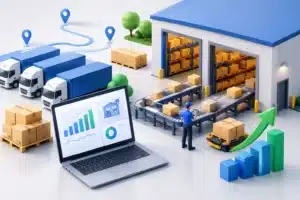
For most mid-market brands, the right model is a coordinated multi-node network built around strong regional warehouses. Instead of forcing every order through one enterprise operator, inventory is distributed across select regions so orders ship shorter distances by ground. That reduces average zone, improves transit times, and lowers parcel spend without requiring enterprise-level volume commitments.
This matters because national fulfillment is not just a warehouse count problem. It is a network design problem. Three well-positioned regional nodes with disciplined coordination can outperform a larger but less accountable setup. If your West Coast demand is served from Nevada, your Midwest volume from Illinois, and your East Coast orders from Pennsylvania or New Jersey, you can often cover most of the country with two-day ground service while keeping costs under control.
That is the part many brands miss when comparing options. Bigger networks are not automatically better networks. What matters is where inventory sits, how intelligently orders are allocated, how reliably each node operates, and whether someone is actively managing the system as one national program instead of a collection of disconnected warehouses.
National fulfillment without ShipBob means better trade-offs
No fulfillment model is perfect. The question is which trade-offs you are making and whether they fit your business.
If you go with a large enterprise 3PL, you may get recognizable branding and broad infrastructure. But you may also get slower support, more rigid operating rules, and less flexibility when your business needs change. That can be acceptable for highly standardized brands with simple fulfillment profiles. It is much less appealing for companies that need responsiveness and attention.
If you go with a single regional 3PL, you may get excellent service but poor national parcel economics. Shipping from one node to the whole country eventually catches up with you, especially as customer expectations tighten and dimensional products make long-zone shipments painful.
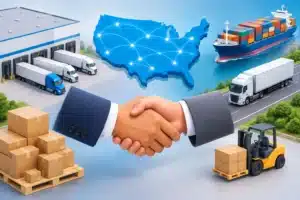
A regional network model sits in the middle in a useful way. It gives brands national reach without forcing them into enterprise bureaucracy. It also keeps local accountability in place. Each node is close enough to operations to care, while the network itself is structured enough to support broader coverage.
That is why more operators are looking for national fulfillment without ShipBob rather than simply replacing one large provider with another. They are not just vendor shopping. They are trying to fix the model.
How to evaluate a non-ShipBob national fulfillment strategy
Start with your order map, not a sales pitch. Where do your customers actually live? What percentage of orders come from each major region? How much are you spending today by zone? If a fulfillment partner cannot show how node placement changes your shipping profile, you are not evaluating strategy. You are evaluating branding.
Next, look at product fit. A network that works for apparel may not work the same way for heavier home goods, regulated products, fragile items, or high-SKU catalogs. Ask hard questions about carton dimensions, storage requirements, special projects, returns handling, and peak volatility. Good operators will answer directly. Weak ones will stay abstract.
Then evaluate service structure. Who owns the relationship? Who has operational authority? How are issues escalated? How often is performance reviewed? If support is routed through layers of tickets and generic account contacts, the model will feel just as frustrating as the one you are trying to leave.
Finally, look at onboarding realism. Multi-node fulfillment can improve performance significantly, but inventory placement, demand planning, and systems coordination need to be done carefully. If a provider makes it sound effortless, be skeptical. The better sign is a partner that can explain the work clearly, set expectations honestly, and still show why the outcome is worth it.
The metrics that matter more than brand name
For a scaling ecommerce brand, the right fulfillment partner should improve a few numbers that have real financial impact.
Average shipping zone is one of them. Lowering it reduces parcel cost and improves transit time at the same time. Two-day ground coverage is another. When most customers can be served quickly through ground rather than premium services, delivery promises become cheaper to keep.
Support responsiveness matters too, even though it does not fit neatly into a dashboard. When your team can reach people who know your account and can solve problems quickly, the operational drag on your business drops. That saves time, protects customer experience, and keeps internal teams from spending every week chasing basic answers.
Contract fit is also more important than many brands admit. If your fulfillment agreement makes it hard to adjust node strategy, add custom workflows, or respond to seasonality, the relationship will become expensive in ways that do not show up on the rate card.
A better national model should improve all four areas: parcel economics, transit speed, service accountability, and operating flexibility.
Why regional networks are gaining ground
There is a reason this model is getting more attention. It fits the realities of the mid-market better than enterprise fulfillment often does.
Growing brands need national coverage, but they also need people to answer the phone, make sensible exceptions, and understand what is happening on the warehouse floor. They need network strategy without enterprise indifference. They need cost reduction without sacrificing execution. They need a fulfillment setup that reflects how their business actually runs.
That is where a coordinated group of independent regional operators can be a better answer. You still get distributed inventory and broad coverage. But you also get operators whose reputation depends on performance, not just platform volume. When managed well, that model combines the commercial advantages of national reach with the service quality that brands usually associate with smaller partners.
For companies looking at alternatives, Ecommerce Fulfillment Alliance is built around exactly that idea: national fulfillment through strong regional operators, coordinated to perform like a smarter network instead of a bloated enterprise system.
If you are evaluating national fulfillment without ShipBob, the real question is not whether you can find another provider with multiple warehouses. You can. The better question is whether your next model will lower zones, improve support, and fit the way your business actually ships. If it does, national scale stops feeling like a compromise and starts working the way it should.