A lot of 3PLs say they offer high-touch service. Then the first time inventory gets misrouted, an ASN is wrong, or a major retailer routing guide changes, you find yourself in a ticket queue waiting three days for an answer. That gap is exactly why concierge 3PL services matter to growing ecommerce brands.
For brands doing real volume, fulfillment is not just a warehouse function. It affects margin, conversion, customer retention, and how much time your team spends fixing preventable mistakes. If your current provider treats your account like a support ticket instead of a business with actual stakes, the problem is not only service. It is operating model.
What concierge 3PL services actually are
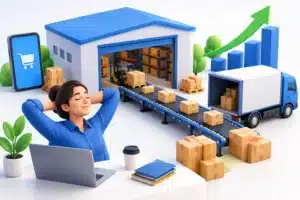
Concierge 3PL services are a fulfillment model built around accountability, accessibility, and operational ownership. Instead of forcing every issue through layers of software, offshore support, or generic account management, a concierge-style 3PL gives brands direct access to people who can make decisions and solve problems.
That does not mean white-glove theater. It means your fulfillment partner knows your SKU mix, your order profile, your carrier constraints, your retail requirements, and your exceptions before they turn into chargebacks or customer complaints.
In practice, concierge service usually shows up in a few specific ways. Your team has real human contacts who respond quickly. Onboarding is managed carefully instead of being pushed through a generic implementation track. Inventory questions, packaging changes, and routing issues get handled by people close to the operation. And when performance drifts, someone owns the fix.
That is a very different experience from the enterprise 3PL model, where scale often comes from standardization first and service second.
Why growing brands ask for concierge 3PL services
Most brands do not start out looking for a concierge provider. They start out trying to fix a business problem.
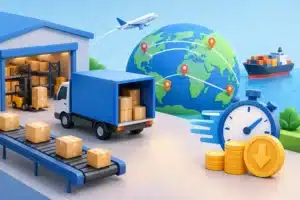
Shipping costs rise because inventory is sitting in one node while customers are spread across the country. Transit times slip because too many orders are crossing too many zones. Support slows down because the provider has too many accounts per manager. Operations get messy because the brand has products that do not fit the clean, simple assumptions of a warehouse built for commodity fulfillment.
At that point, better service is not a luxury. It becomes a performance lever.
A founder or operations leader usually sees the same pattern. The 3PL looked efficient during the sales process. Once implementation ended, communication got weaker, issue resolution got slower, and every nonstandard request started sounding like a problem. If your products are heavy, oversized, bundled, subscription-based, retailer-compliant, or seasonally volatile, that pain shows up even faster.
Concierge 3PL services appeal to brands in that stage because they reduce friction where it matters most. You do not need a provider to impress you with platform screenshots. You need a partner who can keep orders moving, protect the customer experience, and answer the phone when something breaks.
Concierge 3PL services vs enterprise fulfillment
The cleanest way to understand the value is to compare the operating logic.
Enterprise fulfillment providers optimize for uniformity. That makes sense at scale, but it often creates a poor fit for mid-market brands. Their systems are built to process large volumes of similar accounts with repeatable workflows, strict process controls, and narrow tolerances for exceptions. If your business fits the mold, that can work. If it does not, every exception becomes expensive.
Concierge 3PL services optimize for fit and responsiveness. They still need process discipline, but they are structured to adapt. That matters when your catalog changes, a retail channel ramps faster than expected, a product launch creates unusual demand spikes, or your packaging requirements shift with little warning.
There is a trade-off here. A concierge-style model is not about saying yes to everything with no structure. Good operators still need SOPs, measurable SLAs, inventory accuracy discipline, and strong warehouse execution. The difference is that service does not disappear behind policy.
For a brand in the $2M to $50M range, that difference is often the line between a partner that helps you scale and one that forces your internal team to become a permanent escalation unit.
What good concierge 3PL services look like in the real world
The phrase sounds polished, so it helps to make it concrete.
First, communication is direct. You are not chasing five people to understand why orders held, why inbound was delayed, or why parcels missed the daily cutoff. You know who owns the account, who manages the floor, and how issues move from identification to resolution.
Second, implementation is thoughtful. Good onboarding is not a rushed data import followed by crossed fingers. It includes SKU review, carrier profile analysis, packaging logic, special handling requirements, order routing decisions, and realistic planning for transfer inventory. Brands often underestimate how much future pain comes from a weak launch.
Third, the provider understands that fulfillment strategy and warehouse execution are connected. If your brand needs lower shipping costs and faster delivery, the answer may not be a nicer customer support team. It may be a smarter node strategy, inventory placement model, or regional footprint.
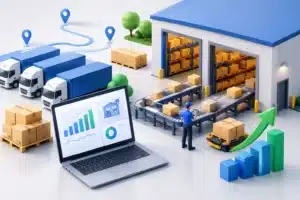
That is where a coordinated multi-node approach can outperform both a single warehouse and a bloated enterprise network. A business like Ecommerce Fulfillment Alliance is built around that idea – giving brands national reach through aligned regional operators, with the service level of people who still treat execution like their reputation depends on it.
Where concierge service pays off fastest
Some brands benefit from high-touch support more than others.
If you ship heavier or dimensional products, every zone reduction matters. A provider that helps you distribute inventory intelligently can lower parcel spend in a meaningful way. If you sell through both DTC and retail channels, service matters because compliance mistakes create downstream costs quickly. If your order flow is promotional, seasonal, or launch-driven, responsiveness matters because demand volatility exposes weak operational communication almost immediately.
The same is true if your business has custom kitting, lot tracking, subscription workflows, or product handling nuances. Standardized 3PLs often treat those realities as operational friction. Concierge providers are more likely to treat them as part of the job.
That does not mean every brand needs the same level of support. A simple catalog with stable demand and lightweight products may do fine in a more automated, low-touch environment. But many scaling brands think they have a cost problem when they really have a fit problem.
How to evaluate concierge 3PL services without getting sold a story
This is where buyers need to be careful. Plenty of providers market themselves as boutique, high-touch, or white-glove. The label is easy. The operating proof is harder.
Ask who actually owns your account once the contract is signed. Ask how support works when an issue affects same-day orders. Ask what happens when inbound inventory is short, retailer prep changes, or packaging specs need to be updated fast. Ask how many clients each account manager handles and whether the warehouse team knows your business beyond what is written in a system note.
You should also ask about network logic. If the provider talks about service but has no clear strategy for zone reduction, carrier optimization, or inventory placement, then the model may be personal but not strategic. Good concierge service is not just being available. It is being useful.
Operational transparency matters too. You want clear reporting, measurable performance standards, and honest conversations about trade-offs. Sometimes a faster rollout creates more risk. Sometimes adding a node lowers parcel costs but increases inventory complexity. Sometimes the right answer is not maximum customization, but a disciplined process with a few smart exceptions.
That is what mature service looks like. It is responsive without being sloppy.
The bigger point
The reason concierge 3PL services are gaining attention is simple. Mid-market ecommerce brands are tired of being told they need enterprise infrastructure when what they really need is accountable execution.
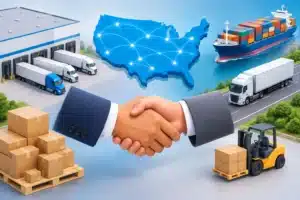
There is a better way than choosing between a giant platform that treats you like a row in a dashboard and a small local warehouse with no national strategy. The best fulfillment setups combine reach, cost discipline, and actual human ownership.
If your team is spending too much time chasing answers, absorbing preventable mistakes, or paying premium shipping because your network was never designed for where your customers live, this is the right time to rethink the model. Better fulfillment is not about more software or a bigger logo on the warehouse door. It is about having the right people, in the right places, making the right decisions before small issues become expensive ones.