National Fulfillment. Without the Enterprise Headache.

HomeBlog

National Reach, Zero Red Tape: How to Scale to Multi-Node Fulfillment Without an Enterprise Contract

multi node fulfillment

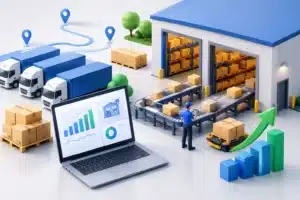
You’ve hit the ceiling. Your ecommerce brand is doing $5M, $10M, or maybe $30M in annual revenue, and your single-warehouse setup is eating your margins alive. You already know multi node fulfillment is the next move. You also know shipping from a single coast is a Zone 8 margin killer that makes your 2-day promise look ridiculous.

But when you start shopping for national 3PL coverage, you hit a different wall: The Enterprise Trap.

To get the reach you need, the big players: think Ryder, Radial, or Stord: want to bury you in a 36-month contract, 50 pages of red tape, take or pay minimums, and a brutal onboarding timeline. You’re a growth brand. Not a legacy retailer. You need speed. Not procurement theater.

At Ecommerce Fulfillment Alliance (EFA), we believe you should not have to sign your life away just to get 2-day ground coverage. Here is how to scale into a smarter network without the corporate handcuffs.

WHY DO ENTERPRISE 3PLS SLOW YOU DOWN?

When you deal with massive fulfillment corporations, you aren’t just paying for storage and pick-and-pack. You are paying for the overhead of their bureaucratic machinery. For a mid-market brand, this manifests in three painful ways:

1. The Multi-Year Lock-In

Most enterprise 3PLs will not even look at you unless you commit to a 2 or 3-year term. They have heavy automation and massive overhead to amortize, and they do it on your dime. If your SKU count changes, your marketing strategy pivots, or their service levels tank, you are stuck. That is the trap. You are not a partner. You are a line item.

2. “Take-or-Pay” Minimums

Enterprise contracts are famous for monthly minimums. If sales dip or you hit a seasonal lull, you still pay as if you are at peak volume. These hidden costs protect the 3PL’s margins, not yours. Brutal. Predictable. Expensive.

3. The Ticket Queue Support Model

Have a problem with a shipment? Good luck. In the enterprise world, you do not have a warehouse manager. You have a Customer Success Associate juggling 50 accounts and telling you to submit a ticket. While your customer is furious about a late delivery, you are parked in a digital waiting room.

Bureaucratic ticket support vs personal concierge service

DOES NATIONAL REACH HAVE TO MEAN CORPORATE INDIFFERENCE?

The mega-3PLs like ShipBob or Flexport sell you on their “platform.” And look, their dashboards are pretty. But dashboards don’t ship boxes: people do.

When you scale into the $2M–$50M range, your needs become more complex. You might have heavier products, dimensional weight challenges, or custom kitting requirements that “standardized” enterprise workflows simply can’t handle.

This is where the “Independent Alliance” model wins. Instead of one massive, rigid corporate entity, EFA is a coordinated network of high-performing, regional owner-operators. You get the same national footprint as the giants, but with the responsiveness of a local partner.

Why Regional Operators Beat “Mega-Warehouses”:

  • Direct Access: You have the cell phone number of the person running the facility. No ticket queues. No runaround.
  • Operational Flexibility: Need a custom insert for a flash sale? An enterprise 3PL would require a 4-week “change order” process. A regional operator gets it done by tomorrow morning.
  • Specialized Expertise: Enterprise 3PLs love small, light, easy-to-pick items. If you ship 40lb boxes or fragile goods, they’ll either overcharge you or break your stuff. Our operators specialize in the “hard stuff” that corporate 3PLs struggle with.

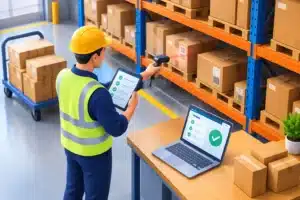
Heavy shipping carton being handled with care

HOW DOES MULTI NODE FULFILLMENT CUT SHIPPING ZONES?

The primary reason to go multi node is simple: money.

If you ship from one warehouse in Los Angeles, a customer in New York is a Zone 8 shipment. That means high cost and slow transit. Want it there in 2 days? Now you are paying for air. That is how margins disappear.

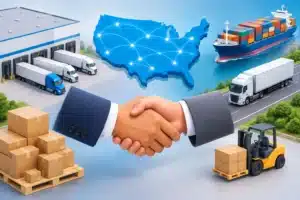
By positioning inventory across the EFA network, with nodes in places like Dallas, Kansas City, Newark, and Jacksonville, you can drop your average shipping zone from roughly 5.5 to 2.5.

The result?

  • 30-40% lower shipping costs
  • 90%+ 2-day ground coverage without paying for air
  • Higher conversion rates because fast shipping stops being a profit leak

That is the operational math behind multi node fulfillment. Fewer long-zone shipments. Less parcel pain. Better delivery speed.

Comparison of single node vs multi-node shipping zones

SOUND FAMILIAR? HAVE YOU OUTGROWN YOUR CURRENT 3PL?

Are you feeling the friction? If any of these sound like your weekly status meetings, it’s time to look at an alternative to the enterprise status quo:

  1. The “Hidden Fee” Surprise: Every month, your invoice has “technology fees,” “account management fees,” or “peak season surcharges” that weren’t in the original pitch.
  2. Service Degradation: As you’ve grown, you’ve noticed that your 3PL’s attention has shifted to their “bigger” clients. You’re no longer a priority.
  3. The Integration Wall: You want to expand to a new sales channel (like TikTok Shop or Target.com), but your 3PL’s “proprietary software” doesn’t support it without a $10,000 custom dev fee.
  4. No One Owns the Result: When things go wrong, everyone points at the carrier or the software. No one takes accountability for the box leaving the building.

WHAT MAKES EFA DIFFERENT FROM ENTERPRISE 3PLS?

We built Ecommerce Fulfillment Alliance specifically for brands that are too big for the basics but too agile for the enterprise. We do not believe in long-term lock-ins. Performance should be the reason you stay.

WHAT DOES ZERO RED TAPE ACTUALLY LOOK LIKE?

  • No Multi-Year Lock-ins: We earn your business every month.
  • Concierge-Level Service: Direct access to management at every node in your network.
  • Multi-Node Strategy: We do not just hand you shelf space. We help design an inventory placement strategy that lowers landed cost.
  • Expert Freight Handling: We thrive on dimensional weight freight and heavier products that make other 3PLs cry.

This is multi node fulfillment without the enterprise nonsense. National coverage. Local accountability. Real operators.

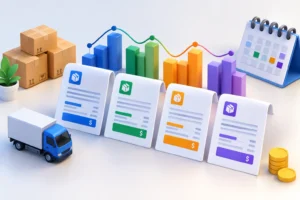
Document showing no long-term contract requirement

READY TO TAKE CONTROL OF YOUR SUPPLY CHAIN?

Scaling your fulfillment does not have to mean surrendering your agility to a corporate behemoth. You can get national reach with the precision and personal touch of an independent operator.

Stop being Ticket #9421 and start being a partner. If you are ready to see how multi node fulfillment can slash shipping costs, improve delivery speed, and eliminate enterprise red tape, let’s talk.

Click here to book a strategy call with the EFA team. We will review your shipping data, analyze your zones, and show you exactly how much you can save without the handcuffs.
 

Free for Brands

See How Much You Could Save on Shipping

We’ll model your zone costs across our network and show you the savings — no commitment required.

Get a Free Analysis →

Related Articles

Dimensonal Weight

Dimensional Weight: The Silent Profit Killer

Dimensional weight (DIM weight) is a calculation used by carriers to bill based on package volume rather than actual weight, often leading to unexpected and devastating shipping costs for ecommerce brands. This post explores the technical math behind DIM weight, why enterprise 3PLs often fail to optimize for it, and how specialized warehousing and distribution strategies can protect margins. By utilizing a multi-node fulfillment network and right-sized packaging, brands can significantly reduce their ecommerce logistics expenses and avoid the “air tax” that plagues bulky or heavy freight.

Read More »
reduce shipping costs ecommerce

Is Zone 8 Killing Your Margins?

Is your ecommerce brand’s profit being swallowed by “Zone 8” shipping costs? For brands doing $2M–$50M in revenue, shipping from a single warehouse often results in an average shipping zone of 5 or 6, leading to unsustainable freight costs and squeezed margins. This article explores how transitioning to a multi-node fulfillment strategy can drop average zones down to 2 or 3, enabling 2-day ground delivery nationwide without the expense of air shipping. Learn how strategic inventory placement and regional carrier expertise can reduce shipping costs by 20-25% while maintaining concierge-level service.

Read More »
order fulfillment companies

ShipBob too Expensive? 5 Hidden Costs of Mega 3PLs You Can Cut Today

Mega-3PLs talk a big game. Then the invoice lands. This post breaks down five hidden costs that crush margins for scaling ecommerce brands: high shipping zones, stacked pick fees, support delays, DIM weight penalties, and rigid contracts. If you are comparing order fulfillment companies, the real question is not just price. It is whether your 3PL lowers total landed cost, gives you direct management access, and actually knows how to handle your freight profile. EFA’s multi-node model helps brands cut zone costs, improve delivery speed, and avoid the bureaucracy that comes with enterprise fulfillment platforms.

Read More »
3pl fulfillment services

The “Ticket Number” Trap: Why Growing Brands are Leaving Mega 3PLs for Fulfillment Alliances

Growing ecommerce brands are leaving mega 3PLs because ticket-based support, rigid processes, and weak accountability create expensive operational drag. This post breaks down why standardized providers fail $2M–$50M brands and what better 3pl fulfillment services should actually deliver: direct access to warehouse leadership, expertise with heavy and dimensional freight, strategic multi-node inventory placement, and lower shipping zones. Ecommerce Fulfillment Alliance offers a more human fulfillment model with national reach, regional accountability, and faster issue resolution so brands can scale without getting trapped in a support queue.

Read More »

About EFA

EFA is a national network of independent regional 3PLs delivering 2-day ground shipping across the US — without the complexity or minimums of enterprise fulfillment.

Learn more about EFA →

More From the EFA Blog

Dimensonal Weight

Dimensional Weight: The Silent Profit Killer

Dimensional weight (DIM weight) is a calculation used by carriers to bill based on package volume rather than actual weight, often leading to unexpected and devastating shipping costs for ecommerce brands. This post explores the technical math behind DIM weight, why enterprise 3PLs often fail to optimize for it, and how specialized warehousing and distribution strategies can protect margins. By utilizing a multi-node fulfillment network and right-sized packaging, brands can significantly reduce their ecommerce logistics expenses and avoid the “air tax” that plagues bulky or heavy freight.

Read More »
reduce shipping costs ecommerce

Is Zone 8 Killing Your Margins?

Is your ecommerce brand’s profit being swallowed by “Zone 8” shipping costs? For brands doing $2M–$50M in revenue, shipping from a single warehouse often results in an average shipping zone of 5 or 6, leading to unsustainable freight costs and squeezed margins. This article explores how transitioning to a multi-node fulfillment strategy can drop average zones down to 2 or 3, enabling 2-day ground delivery nationwide without the expense of air shipping. Learn how strategic inventory placement and regional carrier expertise can reduce shipping costs by 20-25% while maintaining concierge-level service.

Read More »
order fulfillment companies

ShipBob too Expensive? 5 Hidden Costs of Mega 3PLs You Can Cut Today

Mega-3PLs talk a big game. Then the invoice lands. This post breaks down five hidden costs that crush margins for scaling ecommerce brands: high shipping zones, stacked pick fees, support delays, DIM weight penalties, and rigid contracts. If you are comparing order fulfillment companies, the real question is not just price. It is whether your 3PL lowers total landed cost, gives you direct management access, and actually knows how to handle your freight profile. EFA’s multi-node model helps brands cut zone costs, improve delivery speed, and avoid the bureaucracy that comes with enterprise fulfillment platforms.

Read More »
3pl fulfillment services

The “Ticket Number” Trap: Why Growing Brands are Leaving Mega 3PLs for Fulfillment Alliances

Growing ecommerce brands are leaving mega 3PLs because ticket-based support, rigid processes, and weak accountability create expensive operational drag. This post breaks down why standardized providers fail $2M–$50M brands and what better 3pl fulfillment services should actually deliver: direct access to warehouse leadership, expertise with heavy and dimensional freight, strategic multi-node inventory placement, and lower shipping zones. Ecommerce Fulfillment Alliance offers a more human fulfillment model with national reach, regional accountability, and faster issue resolution so brands can scale without getting trapped in a support queue.

Read More »

Ready to Cut Shipping Costs?

Get a free zone analysis — we’ll model your savings across the EFA network.

Schedule a Free Strategy Call →