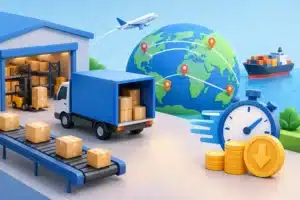
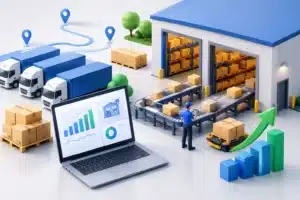
A brand shipping a 10-pound product from one warehouse to customers across the country does not have a packing problem. It has a geography problem. Long parcel zones raise cost, delivery promises get harder to keep, and customer experience suffers even when the warehouse is doing its job well. A regional 3PL partner network changes that equation by placing inventory closer to demand without forcing a growing brand into a rigid enterprise fulfillment contract.
For ecommerce brands between roughly $2 million and $50 million in revenue, this model can be the difference between absorbing rising parcel costs and building a fulfillment strategy that supports profitable growth. But the network label alone is not enough. The structure, accountability, inventory plan, and operating standards behind it matter just as much as the number of warehouse locations.
Why One Warehouse Stops Making Sense
A single fulfillment center is often the right answer early on. It keeps inventory simple, reduces inbound receiving complexity, and gives a brand one operating team to manage. The trouble begins when national order volume grows.
Orders traveling from the East Coast to the West Coast, or the reverse, routinely land in high parcel zones. Two-day delivery may require premium air service instead of ground shipping. For heavier, dimensional, fragile, or multi-item orders, that cost gap can become painful fast. A low-cost shipping rate on paper may also conceal a slower delivery experience that leads to more customer service tickets and fewer repeat purchases.
Large enterprise 3PLs recognize this problem and sell broad national footprints as the answer. Their model can work for very high-volume brands with standardized requirements and the leverage to demand attention. Many mid-market brands find a different reality: complex contracts, slow issue escalation, minimums that outpace their needs, and a rotating cast of account contacts who do not know the business.
The alternative is not simply adding warehouses. Splitting inventory without a disciplined plan can create stockouts in one region while product sits idle in another. A regional network has to make multi-node fulfillment easier to run, not simply more complicated to explain.
What a Regional 3PL Partner Network Actually Does
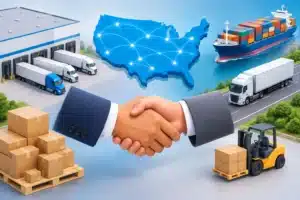
A regional 3PL partner network is a coordinated group of independent fulfillment operators in strategic US markets. Each warehouse retains its local expertise and operational ownership, while the network provides a national fulfillment design for the brand.
That distinction matters. An enterprise provider often operates as one centralized system with layers of approvals between the customer and the floor. A well-managed regional network gives brands access to capable local teams while coordinating decisions across locations. The goal is national reach with real accountability at the warehouse level.
For the brand, the practical outcome is inventory positioned in two, three, or more locations based on where customers buy. Instead of shipping every order from one coast, the brand can fulfill a meaningful share from a nearer node. That lowers average shipping zones and makes 2-day ground coverage achievable for the majority of customers.
It is not a promise that every ZIP code receives every order in two days. Rural destinations, oversized products, carrier disruptions, and seasonal volume still affect transit. The point is to reduce the number of orders that require expensive long-zone ground service or air upgrades just to meet a reasonable customer promise.
The Network Is Only as Good as Its Coordination
A collection of warehouses is not automatically a network. If every location uses different intake rules, order cutoffs, reporting definitions, packaging standards, and escalation processes, the brand is left managing several separate 3PL relationships. That defeats the purpose.
A true network needs a consistent operating playbook. It should define how inventory is allocated, how replenishment is triggered, who owns carrier-performance review, how exceptions are handled, and how the brand sees consolidated reporting. Brands should have clear executive access when a decision crosses warehouse boundaries. They should not have to chase three general managers for one answer.
The best model combines central coordination with local action. A national strategy sets the plan. Regional operators execute it with the speed and care that smaller facilities are often better positioned to provide.
Where the Savings Come From
The most visible gain is parcel spend. Shorter shipping zones generally mean lower ground costs, especially when a brand ships heavier products or packages that trigger dimensional pricing. Reducing the distance between inventory and customers can also limit the need for expedited shipping when a customer expects fast delivery.
There are other savings that deserve equal attention. Faster ground transit can reduce delivery-related contacts and replacement orders. Better geographic coverage can help marketing teams promote a credible delivery promise without funding it through expensive air service. During peak periods, diversified capacity also reduces dependence on one facility that may be labor-constrained or weather-affected.
Still, multi-node fulfillment is not free. More nodes mean additional inbound freight, more receiving events, and a need for safety stock in more than one place. A network makes financial sense when parcel savings and service improvements outweigh those added inventory and operating costs.
That is why brands should not choose node count based on a map alone. A two-node strategy may deliver most of the benefit for a business with concentrated demand. Another brand with dispersed national volume and higher shipping costs may justify three or four locations. The right answer comes from order data, product characteristics, carrier rates, and service goals, not a sales deck showing warehouse pins.
How to Evaluate a Regional 3PL Partner Network
Start with your own order profile. Look at where orders ship, average package weight and dimensions, current shipping zones, seasonal peaks, SKU velocity, and the cost of your service failures. If a provider cannot use that information to explain its proposed network design, it is probably selling capacity rather than strategy.
Then ask who is accountable. You need one point of ownership for the national program, but that person must have the authority to resolve issues at each node. “We will coordinate internally” is not an operating model. Ask what happens when inventory is received incorrectly in one market, a carrier pickup is missed, or one node runs low on a fast-moving SKU. Specific answers are more valuable than generic service-level language.
Technology deserves a practical review as well. Your systems need accurate inventory visibility by location, reliable order routing, usable reporting, and clear exception alerts. But software should support operations, not hide weak operations behind a dashboard. A polished portal does not help if orders are not picked correctly or if no one returns your call when a major retailer shipment needs attention.
Finally, examine the commercial terms. Watch for long commitments, opaque accessorial charges, minimums that assume unrealistic growth, and rate structures that make it difficult to compare true landed fulfillment cost. A good partner will be transparent about where the model saves money and where it adds cost. If every answer points to savings, the analysis is incomplete.
When a Network Is the Wrong Move
Not every brand needs a regional footprint immediately. A company with low order volume, a narrow geographic customer base, highly unpredictable demand, or limited working capital may be better served by one excellent warehouse. Inventory duplication can be more damaging than high-zone shipping when cash is tight and replenishment is unreliable.
Brands with a very small catalog and extremely high SKU concentration may also need less distribution than brands with broad assortments, bundles, or bulky products. Conversely, businesses that sell large, dimensional, high-value, or time-sensitive goods often see the case for regional fulfillment earlier because the cost of long-distance shipping is more severe.
The decision should be phased. Test demand patterns, begin with the locations that address the largest concentration of high-zone orders, and build replenishment discipline before expanding again. A regional strategy should reduce complexity for the customer and the operations team, not create a nationwide inventory headache.
National Coverage Without the Enterprise Headache
The appeal of a regional model is not that independent 3PLs are automatically better than large providers. It is that the right structure preserves what growing brands need most: direct access to people who can make decisions, flexibility when the business changes, and a national plan built around actual order economics.
Ecommerce Fulfillment Alliance is built around that premise. Brands should not have to choose between a single local warehouse with limited reach and an enterprise contract that treats them like a ticket number. They can pursue lower zones, stronger ground coverage, and hands-on operational support at the same time.
Before moving inventory, ask a simple question: where are you paying for distance that your customers neither see nor value? The answer often points to a smarter fulfillment footprint, one regional decision at a time.