A national 3PL can look impressive in a sales deck and still create more operational problems than it solves. That is the central risk in national 3PL partner selection: confusing a large warehouse footprint with a fulfillment strategy that actually works for your brand.
For ecommerce brands shipping across the United States, the right partner should lower average shipping zones, improve delivery speed, and give your team clear answers when something goes wrong. The wrong one can add nodes, split inventory poorly, bury you in ticket queues, and lock you into a contract that gets more expensive as service gets worse.
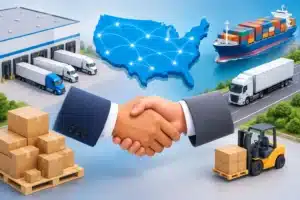
The goal is not to find the biggest provider. It is to find a national fulfillment model that fits your order profile, inventory economics, customer geography, and service expectations.
National 3PL Partner Selection Starts With Your Order Data
Before evaluating any 3PL, get specific about what you need them to solve. “We need national fulfillment” is not enough. A brand with lightweight, high-volume apparel has different needs than a brand shipping oversized home goods, subscription boxes, regulated products, or products with kitting requirements.
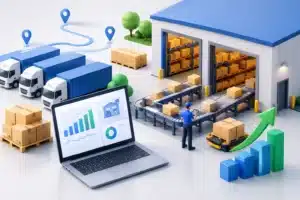
Start with the last 6 to 12 months of shipped-order data. Look at where orders go, average order weight, dimensional weight, package count, SKU velocity, return rates, and seasonal volume swings. This is the evidence a serious partner should use to recommend a network design.
If a provider proposes two, three, or five facilities without asking for this information, they are selling capacity rather than engineering a solution. A warehouse map is not a distribution model.
Your customer density matters most. If a large share of orders lands in the Northeast, Midwest, and Southeast, strategic inventory placement in those regions may provide 2-day ground coverage to most buyers. Adding a West Coast location may still make sense, but only if the order volume and savings justify the added inventory complexity.
More nodes reduce parcel zones. They also create transfer costs, forecasting pressure, minimum inventory requirements, and a greater chance of stockouts in the wrong location. The best model is usually not the one with the most buildings. It is the one that puts the right inventory close to the right customers without making your operation harder to control.
Test the Coverage Claim, Not the Marketing Claim
Most national providers can say they offer national coverage. That phrase tells you almost nothing.
Ask for a zone analysis based on your actual order history. The analysis should show what percentage of orders can reach customers in one, two, and three ground-transit days from the proposed fulfillment locations. It should also show the shipping cost difference between your current setup and the recommended model.
Pay attention to the assumptions. Are they using your real weights and dimensions? Are they pricing the service levels you actually use? Do they account for residential surcharges, additional handling, remote areas, and peak-season conditions? A low headline parcel rate is not meaningful if the invoice is filled with avoidable accessorial charges.
For many mid-market brands, the practical target is 90% or better 2-day ground coverage, not a promise that every ZIP code will receive a package in two days. There are always geographic exceptions. The question is whether the network meaningfully improves the experience for the majority of your customers at a sensible cost.
A credible provider will explain where the plan is strong and where it is not. Be wary of anyone who claims identical speed, cost, and service everywhere. National fulfillment always has trade-offs. Honest operators put those trade-offs on the table before implementation.
Look Beyond Pick Fees and Storage Rates
A common selection mistake is comparing 3PL proposals line by line without calculating the total operational cost. A low pick fee can be offset by expensive receiving, high storage minimums, packaging markups, account management fees, carrier surcharges, or punitive terms for slow-moving inventory.
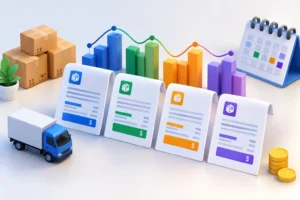
Ask each candidate to model a representative month using your actual volume. Include inbound receiving, storage, pick and pack, packaging, parcel charges, return processing, kitting, special projects, and any technology fees. Then ask what changes during peak season, after a volume drop, or when your SKU count grows.
The cheapest proposal is not automatically the best one. If a slightly higher fulfillment fee reduces your parcel spend and helps avoid late-delivery complaints, it may produce a better total result. The same is true for service. A partner that resolves inventory discrepancies quickly can be more valuable than one that leaves your team chasing answers for days.
Contract terms deserve the same scrutiny as rates. Long commitments, large minimums, vague implementation charges, and difficult exit provisions are often signs that the provider expects the relationship to become inconvenient. Growing brands need a partner that can accommodate normal volatility without treating every change as a billable exception.
Evaluate the People Behind the Network
Technology matters, but fulfillment remains a people business. When inventory is missing, an order is late, or a retailer routing guide changes, your team needs access to someone who understands the operation and has the authority to act.
Enterprise 3PLs often centralize support through ticketing systems and layers of account management. That approach can work for large, standardized programs. It tends to fail brands that need fast decisions, nuanced problem-solving, or hands-on oversight during growth.
During the sales process, ask who will own your account after launch. Meet the operations leaders, not just the sales team. Find out whether you will have direct access to warehouse management, how escalations work, and what response times are expected for urgent issues.
Ask for examples of real problems the team has handled: a carrier outage, an inventory mismatch, a product recall, a sudden influencer-driven demand spike, or a failed marketplace integration. You are listening for practical detail. Strong operators can explain the decision they made, the trade-off involved, and how they prevented a repeat issue.
Regional operators often have an advantage here. They know their facilities, their labor teams, and their carrier performance at a local level. A coordinated regional network can give a brand national reach without forcing every question through an impersonal corporate chain.
Verify Systems Through Real Workflows
Do not accept “we integrate with your platform” as a complete technology answer. The integration itself is only the start. You need to know how inventory, orders, exceptions, returns, and reporting move through the system every day.
Walk through your real workflows. How are orders released? Can you hold an order for fraud review? How are bundles and kits represented? What happens when an item is backordered in one node but available in another? Can the system prevent overselling? How quickly does tracking flow back to your ecommerce platform and customer service team?
Reporting is another dividing line. Your team should be able to see inventory by location, orders shipped, aging inventory, fulfillment accuracy, and carrier performance without waiting for a monthly spreadsheet. Visibility does not fix a problem by itself, but it gives you time to act before a small issue becomes a customer-facing failure.
For multi-node fulfillment, inventory allocation rules are especially important. The network should have a clear method for replenishing facilities, balancing stock, and deciding which node fulfills an order. Without those rules, multiple warehouses can become multiple places for inventory to get stranded.
Build a Scorecard Before the Final Decision
Selection gets easier when every candidate is measured against the same requirements. Build a scorecard before proposals arrive so a polished presentation does not outweigh the things that matter after launch.
Use five categories: network fit, total landed cost, operational service, technology and reporting, and commercial flexibility. Weight them based on your business. A fast-growing brand with complex products may weight service and operational capability more heavily. A mature brand with predictable volume may put more weight on parcel economics and contract structure.
Then require evidence for every score. A claim of 99.9% accuracy should come with a definition, reporting method, and performance history. A 2-day coverage claim should come with a zone map based on your orders. A promise of dedicated support should identify the actual people and escalation path.
References are useful, but choose them carefully. Ask to speak with a brand that resembles yours in order volume, product profile, and growth stage. Ask what surprised them after go-live, how issues are handled, and whether the pricing has matched the original proposal. Those questions produce a more honest picture than asking whether they are “happy.”
Choose Accountability Over Scale
The right national partner should make your fulfillment operation easier to manage as your business grows. That means clear performance expectations, accessible operators, transparent costs, and a network design grounded in your data.
Ecommerce Fulfillment Alliance was built around that premise: national reach can come from coordinated regional expertise, not just a giant centralized provider. The model is especially relevant for brands that have outgrown a single warehouse but do not want to become another account number inside an enterprise 3PL.
Do not rush the decision because a provider has available space or a sales team pushing for a quarter-end signature. Ask for the data, meet the people who will run the work, and pressure-test the assumptions. A national fulfillment partner should earn trust long before your inventory arrives at the dock.