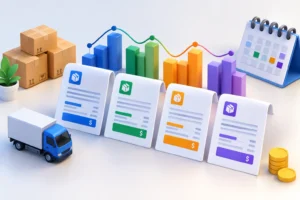
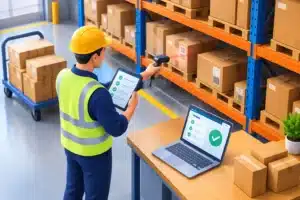
A brand shipping 8,000 orders a month from one warehouse in Pennsylvania may look national on paper. In practice, customers in California, Texas, and the Pacific Northwest are paying for long parcel zones, waiting too long for delivery, and calling support when an order arrives late. So, can regional 3PLs serve national brands? Yes – but only when regional operators function as a coordinated fulfillment system rather than a loose collection of warehouses.
That distinction matters. A single regional 3PL can be an outstanding partner for a local or concentrated customer base. It cannot, by itself, erase the cost and transit-time penalty of shipping across the country. Likewise, adding warehouses without common operating standards, inventory logic, and accountability can create more problems than it solves.
For ecommerce brands between $2 million and $50 million in revenue, the practical question is not whether a provider has a national sales footprint. It is whether the fulfillment model can put inventory closer to demand, maintain consistent execution, and give your team a real person to call when something goes wrong.
Can Regional 3PLs Serve National Brands at Scale?
They can, and in many cases they are better positioned than a large enterprise 3PL to do it. The advantage comes from combining local execution with national coordination.
A strong regional operator knows its warehouse, labor market, carrier mix, and service area in detail. It is often managed by people who are close enough to the floor to see an exception before it becomes a dashboard metric. That tends to produce faster decisions, more practical problem-solving, and less of the ticket-queue experience that frustrates brands at large fulfillment providers.
National service requires more than good local operators, though. A brand needs a network that can decide where inventory belongs, route orders to the right node, use consistent receiving and shipping procedures, and report performance in one coherent way. Without that layer of coordination, the brand is left managing several separate 3PL relationships. That is not national fulfillment. It is a vendor management project.
The right model gives a brand multiple regional fulfillment centers while preserving a single operating plan. Inventory is allocated based on order density, product velocity, parcel cost, and service goals. Orders are routed from the nearest appropriate facility. The brand gets broader coverage without having to sign an inflexible enterprise contract or accept anonymous support.
What National Brands Actually Need From Fulfillment
Large providers often sell scale as if size alone solves fulfillment. It does not. A national brand needs measurable outcomes.
The first is lower average shipping zones. Parcel shipping gets expensive when most orders travel four, five, six, or more zones. Splitting inventory across strategically located facilities can move a meaningful share of orders into Zones 2 through 4, where ground shipping is generally faster and less expensive.
The second is dependable two-day ground coverage. This does not mean paying for air service to force a two-day promise. It means positioning inventory so the majority of customers can receive packages within two days through ground service. For many brands, a well-designed multi-node network can reach 90% or more of the continental United States with two-day ground delivery.
The third is consistent execution. A customer does not care which warehouse fulfilled an order. They care whether the right item arrived on time, undamaged, and with tracking that works. National fulfillment must maintain the same standards for receiving, pick accuracy, packaging, returns, and exception handling across every location.
Finally, brands need accountability. When inbound inventory is delayed, an order is short-shipped, or a carrier claim needs attention, the answer cannot be another help-center article. Growing brands need operators who understand their business and have the authority to act.
Why a Regional Network Can Beat an Enterprise 3PL
Enterprise 3PLs have real strengths. They can offer broad warehouse footprints, established technology, and capacity for very large programs. For a company moving enormous volume with standardized products and a dedicated logistics staff, that model may fit.
But many mid-market ecommerce brands get caught in the gap. They are too complex to be handled as a commodity account, yet not large enough to receive meaningful executive attention. Their products may be heavy, oversized, fragile, bundled, subscription-based, or subject to seasonal swings. These are exactly the conditions where rigid rate cards and standardized operating rules start to hurt.
A coordinated regional network offers a different trade-off. It may not have the corporate polish of a massive provider, but it can provide more direct access to decision-makers and more flexibility around how the work actually gets done. A warehouse manager who understands your product can adjust a packing process, resolve a receiving issue, or respond to a sales spike far faster than a distant support team working through layers of approval.
This is not an argument for accepting inconsistency in exchange for friendliness. Service must be backed by operational discipline. The best regional networks set shared service-level expectations, establish common reporting, align technology, and create clear escalation paths. Local ownership should improve service, not create a different experience at every node.
The Hard Part: Coordinating Inventory Across Nodes
Multi-node fulfillment is not automatically cheaper. It introduces real costs and complexity.
You will carry inventory in more than one place. That means more inbound planning, replenishment decisions, and attention to stock balance. If too much of a fast-selling SKU sits in one region while another location runs out, orders may be rerouted across the country and erase the savings you expected. Slow-moving inventory can also become fragmented, tying up working capital in several facilities.
The answer is not to place every SKU in every warehouse. It is to use a practical inventory strategy. High-velocity products with national demand may belong in multiple nodes. Regional best sellers may need a more targeted allocation. Long-tail items may remain centralized until volume justifies wider placement.
Brands should also be honest about their order profile. If 70% of orders ship to the East Coast, opening a West Coast node may improve customer experience but produce limited overall savings. If demand is dispersed across the country and parcel spend is climbing, two or three strategically placed nodes can materially change the economics.
A competent fulfillment partner should model this before asking you to move inventory. That analysis should account for customer geography, shipping methods, SKU dimensions and weights, order volume, seasonality, inbound freight, and the cost of holding stock in multiple locations. If a provider promises national coverage without asking those questions, they are selling a footprint, not a strategy.
Signs a Regional 3PL Network Is Ready for Your Brand
Not every group of warehouses is equipped to handle national accounts. Before making a change, look past the map.
Ask whether the network has one operating owner for the relationship. Ask how orders are routed, how inventory availability is synchronized, and who resolves cross-node exceptions. Confirm whether reporting lets you see performance by facility, carrier, order type, and shipping zone without manually consolidating files.
You should also understand the standards behind the service promise. How are receiving appointments handled? What is the order cutoff time? How are inventory discrepancies investigated? Are packaging requirements documented and repeatable? What happens when a facility faces a labor shortage, weather event, or carrier disruption?
The answers reveal whether the network is built to support growth or merely hoping to share overflow volume. National brands need redundancy, but they also need clarity. A second warehouse only helps if the team knows when and how to use it.
National Reach Without Losing the Human Element
The false choice in fulfillment is that brands must pick either local service or national scale. They do not. A coordinated network can provide both, provided the operators share standards and the relationship has real ownership.
That is the premise behind Ecommerce Fulfillment Alliance: independent regional operators working as a national fulfillment model for brands that need better coverage without the enterprise headache. The goal is not to make every warehouse identical. It is to make the customer experience consistent while preserving the responsiveness that makes regional operators valuable.
For a growing ecommerce brand, the right next move is not automatically adding facilities or signing with the biggest name in logistics. Start with the numbers: where customers live, what it costs to reach them, which products drive parcel spend, and where service is falling short. A national fulfillment strategy should make those numbers better while making your operation easier to manage.
If it cannot do both, it is just a bigger network of the same old problems.