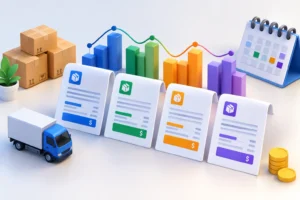
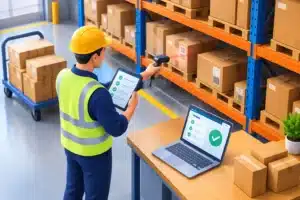
A bad fulfillment relationship rarely fails all at once. It usually starts with a few late orders, a support ticket that sits too long, and shipping invoices that keep creeping up without a clear explanation. The real question is when to switch 3PL providers before those problems become a drag on margin, customer retention, and growth.
For a growing ecommerce brand, changing fulfillment partners is a meaningful operational decision. It takes planning, inventory coordination, systems work, and internal attention. But staying with the wrong provider has a cost, too. If your 3PL is forcing you to absorb expensive shipping zones, work around recurring mistakes, or chase basic answers, loyalty is no longer a strategy.
When to Switch 3PL Providers Instead of Waiting It Out
Not every rough month calls for a new 3PL. A weather event, a carrier disruption, or a short-term volume spike can create problems even in a well-run warehouse. The difference is how your provider communicates, owns the issue, and prevents a repeat.
A switch becomes worth serious consideration when poor performance is systemic, support has become inaccessible, or the operating model no longer fits the business you are building. These are the signs that the relationship has moved beyond a fixable service issue.
1. Shipping costs rise while delivery speed stays flat
Parcel spend is often the first place a fulfillment model stops making economic sense. If most of your inventory ships from one distant warehouse, orders traveling to the opposite coast may be stuck in high zones. That means higher ground rates, slower transit, and a growing temptation to pay for air shipping just to meet customer expectations.
Your provider may blame carrier rate increases, and those increases are real. But that is not the entire story. A national ecommerce brand needs a network strategy, not just a warehouse with discounted labels. If your customer base is spread across the country, placing inventory closer to demand can reduce average shipping zones and put two-day ground delivery within reach for most orders.
Ask for a clear analysis of your shipping zones, service levels, and total parcel costs. If your current 3PL cannot offer a credible plan to improve them, the issue is structural.
2. Order accuracy is becoming a customer service problem
An occasional pick error happens. Repeated wrong items, missing units, duplicate shipments, and preventable stockouts are different. They create refunds, reships, chargebacks, negative reviews, and a customer support burden that does not show up neatly on a fulfillment invoice.
Look past the headline accuracy rate. A provider can report 99% accuracy while still causing real damage if the remaining 1% includes high-value orders, subscription boxes, or your best-selling SKU. What matters is whether they can identify the root cause, document corrective action, and show that errors are trending down.
If every issue requires your team to find it, prove it, and follow up three times, you are doing part of the warehouse’s job for them.
3. You cannot get a real person to solve a real problem
This is one of the clearest reasons to switch. Many large fulfillment providers sell enterprise scale, then route growing brands through ticket queues, account managers with limited operational control, and generic updates that answer nothing.
When inventory is missing, an order feed fails, or a major retailer deadline is at risk, you need access to someone who understands the operation and can make decisions. You should not have to escalate through layers of support just to confirm whether a receiving appointment happened.
Executive accessibility is not a luxury. For brands in the $2 million to $50 million range, it is a practical requirement. The right partner should make accountability easy to reach, especially when the stakes are high.
4. Your business has outgrown a single-node model
A single warehouse can be the right answer for an early-stage brand, a regional customer base, or a product line with low shipping costs. It becomes harder to justify when national order volume grows and customers increasingly expect fast, affordable delivery.
The warning sign is simple: you are paying to ship across the country because all of your inventory lives in one place. The provider may be operating their facility well, but their network is not designed for where your customers are.
This does not always mean you need a massive enterprise contract or five fulfillment centers. Overexpanding too quickly can create inventory imbalance and more complicated replenishment. A better approach is to add nodes based on order density, product profile, and the savings available from lower zones. Two or three well-placed regional facilities can often change the economics dramatically.
5. Your product is being priced or handled like a commodity
Enterprise 3PL pricing models often work best for small, standard parcels with predictable workflows. Brands selling heavier products, oversized items, kits, bundles, regulated goods, or high-SKU catalogs can get punished by generic fee schedules and rigid processes.
Watch for charges that make little operational sense: excessive pick fees for simple orders, vague project charges, recurring storage surprises, or dimensional weight costs that no one helps you address. Pricing should be transparent enough that your finance team can forecast it and your operations team can explain it.
The same applies to handling. If your products require kitting, custom inserts, quality checks, special packaging, or retailer-specific compliance, a provider that treats every exception as an inconvenience will eventually limit your growth.
6. Reporting tells you what happened, not what to do next
A portal full of charts is not the same as operational visibility. You need timely answers to basic questions: What inventory is available by location? Which orders missed SLA? What is driving shipping spend? How long is receiving taking? Which SKUs are creating fulfillment exceptions?
More importantly, your 3PL should help interpret the data. If shipping zones are drifting higher, if an inventory node is running lean, or if a promotional forecast will strain capacity, a good partner brings that forward before it becomes a fire drill.
When reporting is late, inconsistent, or impossible to reconcile with your own ecommerce data, decision-making slows down. That is a serious problem, even if orders appear to be leaving the building.
7. The contract is doing more work than the relationship
Long commitments, difficult exit terms, minimums that no longer match your volume, and fees for ordinary operational changes are all signs of a provider protecting its model at your expense. Contracts need to create clarity, but they should not trap a brand in poor service.
Read the agreement alongside your actual business requirements. Can you add channels, change packaging, move inventory between locations, or adjust capacity as demand changes? Are performance expectations defined? Is there a practical transition process if the provider misses the mark?
A flexible agreement is not a substitute for strong operations. It is evidence that the provider expects to retain business through results rather than friction.
How to Make a 3PL Transition Without Creating More Problems
Switching 3PLs is not something to do impulsively after one bad week. Start with a fact-based scorecard covering fulfillment accuracy, on-time shipment rate, receiving time, support responsiveness, inventory variance, and all-in cost per order. Include the hidden costs your current invoice does not capture, such as reships, customer service labor, and lost margin from premium shipping.
Then model the future state. A new provider should be able to explain where inventory would sit, how orders would route, what percentage of customers could receive two-day ground service, and how the change affects parcel spend. Be skeptical of broad savings promises without your order history, SKU dimensions, and destination data behind them.
A sound transition plan also covers inventory counts, inbound timing, systems integration, order cutover, and contingency stock. Avoid moving every unit on one day if the business cannot tolerate disruption. A phased rollout can reduce risk, particularly for brands with high order volume or seasonal demand.
The best operators make this process feel controlled, not casual. They assign owners, establish milestones, and tell you where the risks are before they become surprises. That is the standard a coordinated regional network such as Ecommerce Fulfillment Alliance is built to meet: national reach without handing your brand over to an impersonal fulfillment machine.
Your fulfillment partner should make growth easier to manage. If your team spends more time chasing orders, explaining costs, and compensating for warehouse mistakes than planning the next stage of the business, do not wait for the problem to become normal. Start measuring the gap, build the transition plan, and choose a provider that earns the right to keep your inventory.