A brand shipping 8,000 orders a month does not need a logo on a warehouse wall. It needs orders out accurately, parcel costs under control, and a person who answers when a retailer routing guide changes on Friday afternoon. That is the real decision behind independent 3PL versus enterprise providers. The question is not which model sounds bigger. It is which one gives your operation the performance and accountability required at your current stage of growth.
For ecommerce brands in the $2M to $50M range, enterprise fulfillment can look like the safe choice. The sales deck promises national reach, advanced technology, and unlimited scale. Then the contract starts, the implementation queue grows, and a ticketing portal replaces the person who sold you the service. Independent operators can have the opposite problem: excellent local service but limited geographic coverage.
The smarter option is often not choosing scale or service. It is choosing a fulfillment structure that delivers both.
Independent 3PL Versus Enterprise Providers: The Real Difference
Enterprise providers are designed to standardize. Their economics depend on moving a high volume of customers through repeatable processes, common technology, fixed operating rules, and centralized support teams. That approach can work for simple, high-volume order profiles that fit the provider’s preferred model.
But your business may not fit that model. Perhaps your products are oversized, fragile, bundled, subscription-based, regulated, or subject to seasonal spikes. Perhaps a meaningful share of your revenue comes from wholesale, marketplace, or retail replenishment orders alongside direct-to-consumer shipments. In those cases, a standardized operation can turn normal business requirements into exceptions, and exceptions tend to become expensive.
Independent 3PLs generally operate differently. Local ownership creates a shorter path between the customer and the people managing the floor. A warehouse manager can make a decision. An owner can get involved. A client is more likely to have a direct relationship with an operations team that knows its SKUs, packaging requirements, and recurring trouble spots.
That does not mean every independent warehouse is a fit. A single-site operator may be exceptional at fulfillment and still be unable to solve high-zone shipping costs for a national customer base. The distinction that matters is whether an independent provider has the operational discipline and network access to support your actual distribution strategy.
Where Enterprise Fulfillment Often Breaks Down
Large providers are not inherently bad operators. They are built for a certain kind of customer and a certain kind of consistency. Problems arise when a growing brand signs an enterprise agreement expecting white-glove partnership and receives a managed account by queue.
Service Becomes a Process, Not a Relationship
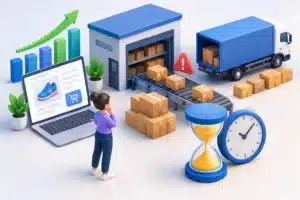
At an enterprise 3PL, the person accountable for your account may be managing dozens or hundreds of others. Escalations pass through account management, customer support, warehouse operations, and sometimes a separate technology team. Each group may be competent. The issue is that no one has enough authority or context to resolve a problem quickly.
For a brand, that delay is not administrative. It can mean canceled orders, missed retailer appointments, inventory that cannot be received, or a customer service team spending the day explaining why shipments have not moved.
Independent operators usually offer tighter executive access and clearer ownership. When performance slips, you should know who is fixing it, what changed, and when it will be resolved. That is basic accountability, not a premium feature.
Contracts Can Outlive the Fit
Enterprise contracts often protect the provider’s capacity planning more than the customer’s flexibility. Minimums, long commitments, implementation fees, storage provisions, and change-order charges may be reasonable in isolation. Together, they can make it difficult to adapt when your product mix, sales channels, or order volume changes.
A growing brand needs commercial terms that reflect reality. You should understand the unit economics before signing, including pick fees, insert fees, receiving charges, storage, account management, special projects, packaging, and peak-season surcharges. If a provider cannot explain those costs plainly, the low headline rate is not the number to trust.
Scale Does Not Automatically Lower Parcel Costs
Enterprise providers frequently sell scale as a cost advantage. Yet the largest fulfillment footprint does not help much if your inventory is sitting in one distant facility while most customers are several zones away. Parcel spend is driven by more than a negotiated carrier rate. Weight, dimensions, delivery zone, residential surcharges, and shipping location all matter.
A centrally located warehouse can be the right answer for some brands. It is often not the right long-term answer for brands shipping nationally, especially those with heavier or dimensional products. Inventory positioned closer to demand can reduce zones, improve delivery speed, and limit the need to buy expensive air service to meet customer expectations.
What Independent Networks Can Do Better
An independent 3PL should not be judged only by the size of one building. The better question is whether it can place inventory in the right regions while keeping execution personal and commercially sensible.
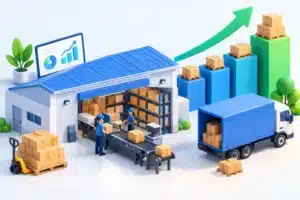
A coordinated network of regional operators gives a brand access to multiple fulfillment nodes without handing the entire operation to a distant corporate structure. The brand gains geographic reach, while each warehouse remains close enough to its own operation to care about the details.
For many national ecommerce brands, two or three well-positioned nodes can place the majority of customers within two-day ground coverage. That can lower average shipping zones and create a better delivery experience without forcing the brand into a costly enterprise model. The right node count depends on order density, product characteristics, inbound freight patterns, and where customers actually live. More warehouses are not always better. Splitting inventory too aggressively can create stock imbalances, higher inbound costs, and unnecessary complexity.
This is why network design should start with order data, not a map. Review your shipment history by destination, service level, package profile, and seasonal pattern. Model the parcel savings against the cost of additional inventory positioning. A provider that jumps straight to a standard network recommendation without this analysis is selling capacity, not strategy.
Ecommerce Fulfillment Alliance was built around this model: national fulfillment through coordinated regional operators, with the service standards and operational accountability that mid-market brands often lose at enterprise providers.
How to Compare Providers Without Getting Distracted by Sales Claims
The sales process should produce evidence, not just reassurance. Ask every provider to walk through how it will operate your business in the first 90 days, during peak season, and when something goes wrong. Listen for specifics.
Start with fulfillment accuracy, same-day cutoff performance, receiving turnaround, inventory reconciliation practices, and the process for cycle counts. Then ask who owns your account operationally and what access you will have to decision-makers. A named account manager is not enough if that person cannot influence warehouse priorities.
Technology matters, but it should support operations rather than hide weak operations. Confirm which integrations are native, how inventory updates flow across channels, how exceptions are flagged, and whether reporting shows the metrics you need. You do not need a flashy dashboard if it cannot explain why orders were delayed or where your costs changed.
Finally, evaluate the commercial model using your own data. Provide a representative order file and SKU master. Ask for a modeled estimate that separates fulfillment fees, storage, receiving, packaging, and projected parcel costs. Compare the total landed fulfillment cost, not a single pick-and-pack price. The cheapest quote can become the most expensive option when accessorial charges and higher shipping zones appear on the invoice.
When an Enterprise Provider May Be the Right Choice
There are cases where enterprise fulfillment makes sense. A brand with extremely predictable, high-volume orders, simple products, a mature internal logistics team, and a need for standardized processes across many markets may benefit from a large provider’s infrastructure. The same can be true for companies that need specialized compliance capabilities that a regional operator cannot support.
The point is not to reject enterprise providers on principle. It is to avoid paying enterprise prices and accepting enterprise friction when your business needs responsiveness, flexibility, and a more hands-on operating partner.
A good provider should make your fulfillment operation easier to manage as you grow, not require your business to conform to its internal limitations. Before you sign the next contract, ask a simple question: when a real operational problem hits, will this provider treat it like a ticket or treat it like it is their problem too?