A shopper in Ohio does not care that your inventory is sitting in a great warehouse in Southern California. They care that the checkout page says their order will arrive quickly – and that it does. That is why founders and operations leaders keep asking: is 2 day ground realistic without paying for air shipping or signing an enterprise fulfillment contract?
For many growing ecommerce brands, the answer is yes. But it is not a warehouse feature you can simply turn on. Two-day ground coverage is the outcome of a deliberate fulfillment footprint, sensible inventory placement, disciplined order processing, and an honest understanding of what carriers can deliver to each customer ZIP code.
The brands that get this right lower parcel costs while improving the customer experience. The brands that get it wrong often pay for premium shipping to compensate for a poorly designed network.
What 2-Day Ground Actually Means
“2-day ground” is often used as shorthand for reaching most US customers within two transit days through standard ground parcel services. It is not the same as promising every order will arrive two calendar days after checkout.
A carrier’s transit clock usually starts after the order has been picked, packed, manifested, and tendered. If an order arrives after your warehouse cutoff, sits until the next business day, or is placed on a Friday afternoon, the customer’s experience can be very different from the transit map. Weekends, holidays, rural destinations, weather disruptions, and carrier exceptions also matter.
That does not make the goal less valuable. It makes the language and operating model more important. A credible brand targets two-day ground coverage for the large majority of its customer base, then sets checkout expectations that reflect actual processing time and destination-level service.
For a national ecommerce business, a common benchmark is 90% or more of orders within a two-day ground delivery zone. Whether that is achievable depends primarily on where customers live and where inventory ships from.
Is 2-Day Ground Realistic From One Warehouse?
Sometimes. For most national brands, not at the coverage level they want.
A single centrally located warehouse can provide surprisingly strong reach, particularly for brands whose order volume is concentrated in the Midwest, Texas, or the central and eastern US. But one node still leaves meaningful pockets of the country in three- to five-day ground territory. A warehouse in Nevada may serve the West exceptionally well while creating longer transit times to the Southeast. A Pennsylvania location can perform well in the Northeast and Mid-Atlantic while leaving West Coast customers waiting.
The problem is geography, not poor warehouse execution. Ground carriers move parcels through zone-based networks. The farther a package travels from its origin, the higher the zone generally becomes, the longer transit takes, and the more shipping tends to cost.
For a brand with a heavily regional customer base, one warehouse may be the commercially correct choice. Adding facilities too early can create inventory complexity, transfer costs, and avoidable operational overhead. But if orders are broadly distributed across the country, trying to force a single-site model to deliver two-day ground usually means accepting slower service or buying expensive air upgrades.
Neither is a great long-term answer.
The Footprint That Makes the Promise Work
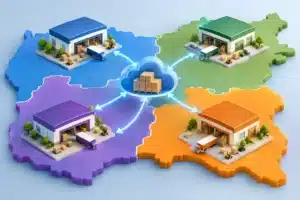
Two-day ground becomes realistic when inventory is positioned close enough to demand. In practice, that often means two or three well-chosen regional fulfillment nodes, not a sprawling national network of facilities.
The best locations are not chosen because a map looks balanced. They are chosen using your actual shipping data: order destinations, parcel weights and dimensions, product mix, carrier service levels, and order-volume concentration. A lightweight apparel brand with dense East Coast demand needs a different footprint than a brand shipping bulky home goods across the Sun Belt.
A common two-node model pairs a West or Southwest facility with a Midwest, Texas, or East Coast facility. A third node may be justified when customer demand, product characteristics, or service expectations make it economically worthwhile. The objective is to reduce average shipping zones while covering major population centers within two ground days.
That is the strategic advantage of a coordinated regional model. Ecommerce Fulfillment Alliance connects brands with independent regional operators that can function as a single national fulfillment strategy. The brand gets inventory closer to customers without being trapped in the rigid processes, generic support queues, and long contracts that often come with enterprise 3PL networks.
More buildings alone do not solve the problem. The network has to operate as one system. Inventory needs to be allocated intelligently, orders need to route to the right node, and every warehouse needs clear standards for receiving, pick accuracy, packaging, cutoff times, and exception handling.
Fast Ground Shipping Starts Before the Carrier Pickup
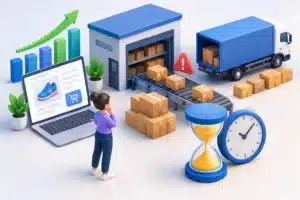
A two-day transit map means little if orders take two days to leave the building.
This is where many fulfillment conversations get overly focused on carrier logos and overlook the basics. If your stated cutoff is 2:00 p.m. local time, an order placed at 1:45 p.m. should not quietly become tomorrow’s work. If inventory data is inaccurate, split shipments increase and delivery promises fall apart. If a warehouse has no process for handling address issues, stockouts, or late inbound receipts, those exceptions will show up in customer service tickets.
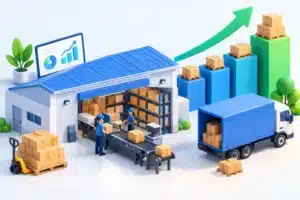
For most brands, the operational foundation includes same-day fulfillment for orders received before a defined cutoff, reliable carrier pickups, real-time order and inventory visibility, and clear escalation paths when performance slips. These are not premium extras. They are the conditions required for a credible delivery promise.
Packaging matters too. Oversized cartons can push a shipment into costly dimensional-weight pricing. Fragile or multi-piece orders may require more handling time. Heavy products can make zone reduction especially valuable because every extra zone adds more parcel expense. The right fulfillment design accounts for these realities before anyone starts talking about a generic two-day coverage percentage.
The Trade-Off: Inventory Depth vs. Shipping Savings
Multi-node fulfillment is not free. Every additional node introduces inventory allocation decisions. Put too little stock in a region and you create stockouts or force orders to ship from farther away. Put too much stock everywhere and you tie up working capital while increasing the risk of stranded inventory.
This is why the right answer is rarely “put every SKU in every building.” Fast-moving products and core bundles may belong across multiple nodes. Slower-moving, seasonal, oversized, regulated, or highly variable items may be better centralized. The allocation model should reflect demand velocity and margin, not a simplistic rule that every facility carries identical inventory.
Brands also need to weigh inbound freight. Splitting container or truckload receipts across multiple warehouses can cost more than sending everything to one location. The savings from lower outbound zones, fewer air upgrades, and better conversion from faster delivery must outweigh that added complexity.
A good fulfillment partner will show the math. If a proposed network cannot explain projected zone distribution, parcel savings, inventory requirements, and implementation assumptions, it is a sales pitch, not a strategy.
How to Test Whether 2-Day Ground Is Viable
Before changing warehouses or adding nodes, analyze the last six to 12 months of order history. You are looking for the geographic and operational facts behind the promise, not a generic coverage claim.
At a minimum, assess these four areas:
- Destination concentration: Where do orders actually ship? State-level data is useful, but ZIP-code-level density is better.
- Parcel profile: Review average weight, dimensions, shipping cost, and the percentage of orders affected by dimensional pricing or surcharges.
- Service performance: Separate warehouse processing time from carrier transit time. A late delivery is not always a carrier failure.
- SKU velocity: Identify which products need regional inventory and which can remain centralized without hurting the customer experience.
Then model one-node, two-node, and three-node scenarios. Compare each model’s average zone, two-day coverage, projected parcel cost, inventory duplication, and operational risk. A two-node model that reaches 88% of customers in two days at a meaningful savings may be smarter than a three-node model that reaches 94% but adds complexity your business does not need.
Avoid the “Free 2-Day Shipping” Trap
Customers respond to fast, clear delivery expectations. They do not require every brand to mimic the economics of a marketplace giant.
If your margin cannot support free shipping on every order, do not hide the cost inside a promise that damages profitability. You can use order thresholds, memberships, selected-product offers, or paid expedited upgrades. The key is that your advertised service matches what the fulfillment network can deliver consistently.
Likewise, do not label an order “2-day delivery” when you mean “two-day transit after one or two days of handling.” Be specific at checkout. A realistic promise creates trust. An aggressive promise that arrives late creates support volume, refunds, and lost repeat purchases.
Build for the Customers You Have, Then the Growth You Expect
Two-day ground is realistic for many $2M-$50M ecommerce brands, but it is earned through network design, not wishful thinking. The goal is not to copy an enterprise fulfillment footprint or pay air rates to cover a geographic mistake. It is to place inventory where it produces better delivery performance and healthier unit economics.
Start with your customer map, your parcel data, and your actual operating constraints. If the numbers support a regional network, build one that gives customers faster ground delivery without handing your business over to an impersonal fulfillment machine. The right footprint should make growth easier to manage, not harder to explain.