A fulfillment provider can look great in a sales deck and still create expensive problems after launch: rising zone costs, unanswered tickets, rigid receiving rules, and a team that treats your account like a number. That is the real question behind Flexport versus independent 3PLs. Growing ecommerce brands are not simply choosing a warehouse. They are choosing an operating model for the next stage of growth.
For a brand doing $2 million to $50 million in annual revenue, the wrong model can erase the margin gains from better marketing, higher conversion rates, or a successful product launch. The right model puts inventory closer to customers, gives your operations team direct access to people who can make decisions, and supports growth without forcing you into an enterprise contract built for someone else.
Flexport versus independent 3PLs: the operating model
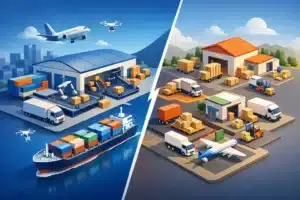
Flexport is associated with a technology-led, centralized logistics approach. For brands that need broad logistics capabilities, standardized processes, and potentially coordinated freight and fulfillment under a larger provider, that structure can be appealing. Centralized systems can bring consistency, reporting, and a single commercial relationship.
An independent 3PL is a different proposition. It is usually a regional warehouse operator with local leadership, hands-on account management, and deeper control over how work gets done on its floor. The best independent operators are not small because they lack expertise. They are focused because they have built their business around executing well in a specific region, for specific product types, and for customers they know by name.
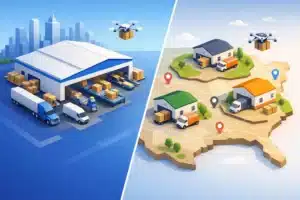
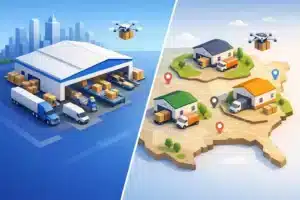
The trade-off is reach. One independent warehouse in one market may offer outstanding service but cannot, by itself, shorten delivery zones for a brand shipping nationwide. A coordinated network of independent 3PLs changes that equation. It combines regional execution with a national inventory strategy, without requiring a brand to hand every operational decision to a large enterprise provider.
That distinction matters. A national footprint is only valuable when every node follows clear standards for receiving, inventory accuracy, order cutoffs, returns, reporting, and escalation. More warehouses without accountable coordination simply create more places for problems to hide.
The cost question is bigger than pick-and-pack rates
Many fulfillment comparisons begin with a rate card. That is understandable, but it is also where brands get trapped. A low pick-and-pack fee does not help much if your inventory sits in one distant location and a large share of orders travel across four, five, or six shipping zones.
Parcel spend is often the bigger lever. A distributed inventory model can place product in two or more regions, reducing average zones and making 2-day ground delivery possible for most customers without paying for air service. For heavier, dimensional, or lower-margin products, that change can be substantial.
But splitting inventory has real costs. You may need more safety stock across nodes. Inbound freight may need to be allocated across multiple facilities. Rebalancing inventory requires planning, and slow-moving SKUs do not always belong everywhere. A good fulfillment partner should model these trade-offs before recommending a network design, rather than treating more warehouses as an automatic win.
Enterprise providers can also charge through complex minimums, onboarding fees, storage rules, special-project charges, and contract provisions that are easy to overlook during a fast sales process. Independent 3PLs may have more flexible commercial terms, but flexibility should not mean vague pricing. Ask for a clear explanation of every billable event, including receiving, storage, packaging, returns, kitting, account management, and peak-season work.
The goal is not the cheapest invoice line. It is a predictable total fulfillment cost that improves as your order volume and geographic reach increase.
Service is where the model becomes visible
When a shipment is late, inventory is short, or a retailer needs a special routing request, your brand does not need another support queue. You need someone empowered to solve the problem.
Large providers often operate through layered account structures. That can work when your business fits their standard workflow and your volume earns attention. It becomes frustrating when you have an unusual product, a time-sensitive launch, or a legitimate exception that does not fit a ticketing system.
Independent operators tend to win on accessibility. The warehouse manager, owner, or senior account lead may be close enough to the work to understand what changed and fix it quickly. That proximity is especially useful for brands with fragile products, subscription kits, retail compliance needs, complex bundles, or seasonal volume swings.
Still, personal service is not enough on its own. A regional 3PL must have disciplined operating practices, warehouse technology, measurable service levels, and the capacity to scale. The choice is not between technology and human accountability. A serious fulfillment partner needs both.
Questions that expose the real service level
Ask who owns the relationship after implementation, how quickly exceptions are acknowledged, and whether you can speak directly with the people responsible for your account. Ask for examples of how the provider handled a receiving error, a carrier disruption, or a same-day change to an order rule.
Also ask what happens when performance slips. A credible partner can explain its escalation process, root-cause review, and corrective action. If the answer is mostly about opening a ticket, you have learned something important.
National coverage without losing local accountability
For a brand shipping nationally from one facility, the case for multiple nodes is straightforward: customers on the opposite coast wait longer, shipping zones rise, and customer experience becomes inconsistent. The answer is usually not an oversized national provider by default. It is a network strategy built around your order density, product profile, and customer map.
A coordinated group of regional 3PLs can offer a practical middle ground. Inventory might sit in the East, Central, and West regions, with each operator handling local execution while one coordinating layer manages standards, reporting, inventory allocation, and commercial accountability. Done well, this can produce 90% or more 2-day ground coverage for many US ecommerce brands.
The phrase “done well” carries weight. Brands should not accept a network claim without asking how it is governed. Are operating procedures shared? Is there one source of truth for inventory? Who owns the escalation when an order crosses systems or one node misses an SLA? Can the network shift volume during a weather event, peak season, or capacity crunch?
Ecommerce Fulfillment Alliance was built around this model: national fulfillment through independent regional operators, with the coordination required to make the network function as one accountable solution. It is designed for brands that need broader coverage but do not want to trade away access, flexibility, and operational judgment.
When each option makes sense
Flexport or another large, centralized logistics provider may fit a brand that values an established enterprise platform, has broad logistics requirements, and can operate comfortably within standardized workflows. This can be a reasonable choice when internal teams prefer a single large vendor relationship and the provider’s operating model matches the brand’s needs.
An independent 3PL can be the stronger choice when service quality, direct communication, and operational flexibility matter more than enterprise branding. It is particularly compelling for brands with complicated fulfillment requirements or products that are priced poorly under a one-size-fits-all model.
A coordinated independent network is often the better fit when a mid-market brand needs both: local operator accountability and national shipping performance. Consider this route if you are seeing any of these signals:
- Your parcel costs are climbing because too many orders ship across long zones.
- Your current provider is hard to reach when an exception affects customers.
- You need two-day ground coverage, but do not want to sign an inflexible enterprise agreement.
- Your products need thoughtful handling, custom packaging, kitting, or retailer-specific work.
Before changing providers, map where your orders actually go, calculate your current average shipping zone, and identify the exceptions that consume your team’s time. Those facts will tell you more than any fulfillment sales pitch. The best partner is the one whose model makes your next year of growth easier to operate, not just easier to buy.