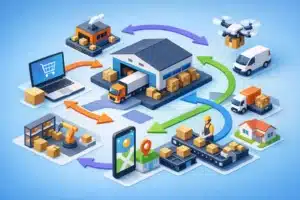
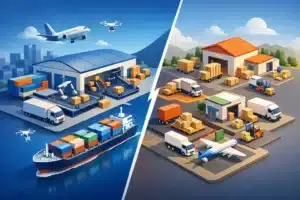
A California customer orders at 2:15 p.m. Your system ships it from Pennsylvania because that location has every SKU available. The order arrives late, the parcel charge is higher than it should be, and nobody notices until the monthly shipping report lands. That is the real problem behind how to optimize order routing: not finding a clever rule, but making the right fulfillment decision on every order without creating more exceptions for your team.
For growing ecommerce brands, routing is where inventory strategy, warehouse execution, carrier costs, and customer promises meet. Get it right and you reduce average shipping zones while expanding practical 2-day ground coverage. Get it wrong and even a good 3PL network becomes an expensive collection of disconnected warehouses.
What order routing should actually optimize
Order routing is the logic that decides which fulfillment location receives an order. Many brands treat the nearest warehouse as the obvious answer. Distance matters, but it is only one variable. A routing strategy built solely on proximity can split shipments, drain the wrong inventory pool, overload a warehouse, or send an order through a carrier service that misses the delivery promise anyway.
The objective is to find the lowest total-cost path that still meets the customer experience you have promised. Total cost includes more than the shipping label. It includes pick and pack expense, packaging, split-order risk, inventory repositioning, labor constraints, cutoff times, and the cost of a late delivery or avoidable support ticket.
That means the best routing decision is often conditional. Ship the nearest complete order from the closest node. Route a low-margin, oversized item from the warehouse with the best negotiated regional parcel rate. Keep a scarce SKU at a central node until replenishment arrives. The right answer depends on the order, the inventory position, and the operational reality at that moment.
Start with your order and destination data
Routing rules are only as good as the data beneath them. Before changing software settings or opening another warehouse, look at the last 60 to 90 days of orders. Map where customers live, what they buy together, how much their orders weigh, and which ZIP code regions create the highest shipping costs.
A useful analysis separates volume from cost. A market may represent only 8% of orders but consume an outsized share of parcel spend because products travel from the opposite coast. Another region may already receive fast delivery, making a new fulfillment location there hard to justify.
Pay particular attention to your most frequently ordered SKU combinations. If customers regularly buy Product A and Product B together, but each is stocked in different locations, the network will either split orders or route them farther than necessary. Neither outcome is free. Split shipments raise handling and parcel costs while creating a less polished unboxing experience. Long-distance single shipments may preserve the package count but can push you into expensive zones.
Also check the difference between what your storefront promises and what your carrier performance delivers. Two-day delivery is not simply a two-day service level. Ground coverage depends on origin ZIP code, destination, order cutoff time, warehouse processing speed, weekends, and carrier pickup schedules. A routing model that ignores any of those details will produce attractive dashboards and disappointed customers.
How to optimize order routing with a clear rule hierarchy
The most practical routing models use a hierarchy, not a single blanket rule. This stops lower-value decisions from overriding higher-value customer or cost requirements.
Start with service eligibility. If a customer paid for expedited shipping, the order should only be routed to locations that can meet that commitment based on current cutoff times and carrier options. Do not send it to the cheapest node if the parcel will miss the promised date.
Next, prioritize inventory completeness. A single shipment from a slightly farther warehouse is frequently cheaper and better for the customer than two packages from nearby facilities. That said, do not force every order into a single shipment at any cost. For large, heavy, or dimensional products, the zone savings from a closer node can outweigh the added handling of a split shipment. Your rules should reflect actual parcel economics, not an assumption that one box is always best.
Then consider landed fulfillment cost. Compare the carrier rate, pick fee, packaging needs, and any location-specific surcharge. This is especially important for brands selling bulky goods, subscription bundles, or products that trigger dimensional-weight pricing. The lowest pick fee can become irrelevant when the shipment travels four extra zones.
Finally, protect operational capacity. A warehouse that is technically closest but backed up, short-staffed, or beyond its daily cutoff should not keep receiving orders simply because a routing rule says so. Capacity-aware routing prevents one node from becoming the network’s default dumping ground during promotions and peak periods.
Put inventory in the places your customers already are
Routing cannot compensate for inventory that is consistently in the wrong part of the country. If most of your stock sits in one facility while demand is national, the system has no low-cost option for a large share of orders.
The goal is not to stock every SKU in every warehouse. That creates more working capital, more reconciliation work, and more chances for inventory accuracy problems. Instead, place fast-moving and high-impact SKUs in the regions where demand and shipping-zone savings justify it. Keep slow movers, volatile items, and specialty products more centralized unless the service benefit is clear.
This is where mid-market brands often outgrow a single-node setup but do not need the rigid cost structure of a massive enterprise provider. A coordinated regional network can position inventory closer to demand while maintaining a plan for replenishment, returns, and shared operating standards. Ecommerce Fulfillment Alliance uses this model to give brands national reach without treating every account like a ticket number.
Inventory allocation should be reviewed on a regular cadence, not just when a warehouse runs out of stock. Seasonal demand shifts, product launches, retail activity, and marketing campaigns can quickly change the best stocking plan. If a campaign is aimed at the Southeast, moving inventory after the orders arrive is already too late.
Build exception rules before exceptions become manual work
The basic routing path should handle most orders automatically. Your team should only review the orders that genuinely require judgment, such as address issues, unusual bundles, stock discrepancies, or orders where every option misses the promised delivery date.
Create specific escalation rules for low-inventory thresholds, oversized items, hazmat restrictions, carrier blackouts, and orders that would require three or more shipments. Without these guardrails, automation can make bad decisions faster. With too many guardrails, every order becomes an exception queue. The right balance is a simple default path plus a small, visible set of business-critical exceptions.
It also helps to define who owns each decision. Your warehouse team should not have to guess whether it is acceptable to split an order to protect a two-day promise. Your customer support team should know what happens when an order is rerouted after a stockout. Clear ownership is less glamorous than routing software, but it is usually where execution improves.
Measure results beyond the shipping bill
A lower average shipping cost is a win only if delivery performance and fulfillment quality hold up. Review routing performance by node, region, carrier, service level, and order type. Look for your average shipping zone, parcel cost per order, split-shipment rate, on-time delivery rate, and the percentage of customers reachable by two-day ground service.
Then compare those numbers against the outcomes that matter commercially. Are delivery-related support contacts falling? Are expedited orders meeting their promise? Did a lower-cost routing change create more packing errors or delayed handoffs? A good routing strategy should reduce friction across the operation, not merely move cost from the parcel invoice to another line item.
Do not wait for an annual network review to act. A rate change, a warehouse staffing issue, or a sudden regional sales spike can make an old rule expensive within weeks. Monthly reviews are usually enough for network-level decisions, while daily monitoring should flag service failures and capacity problems before they spread.
Treat routing as a living operating system
The brands that control fulfillment costs best do not chase a perfect routing rule and leave it untouched for a year. They make routing a management discipline: clean data, intentional inventory placement, clear priorities, and regular adjustments when the facts change.
Start with one question your team can answer honestly: when an order ships from the wrong location, do you know why? If the answer is no, fix that visibility first. Once the decision path is visible, the savings, speed, and accountability become much easier to improve.